 EN
EN


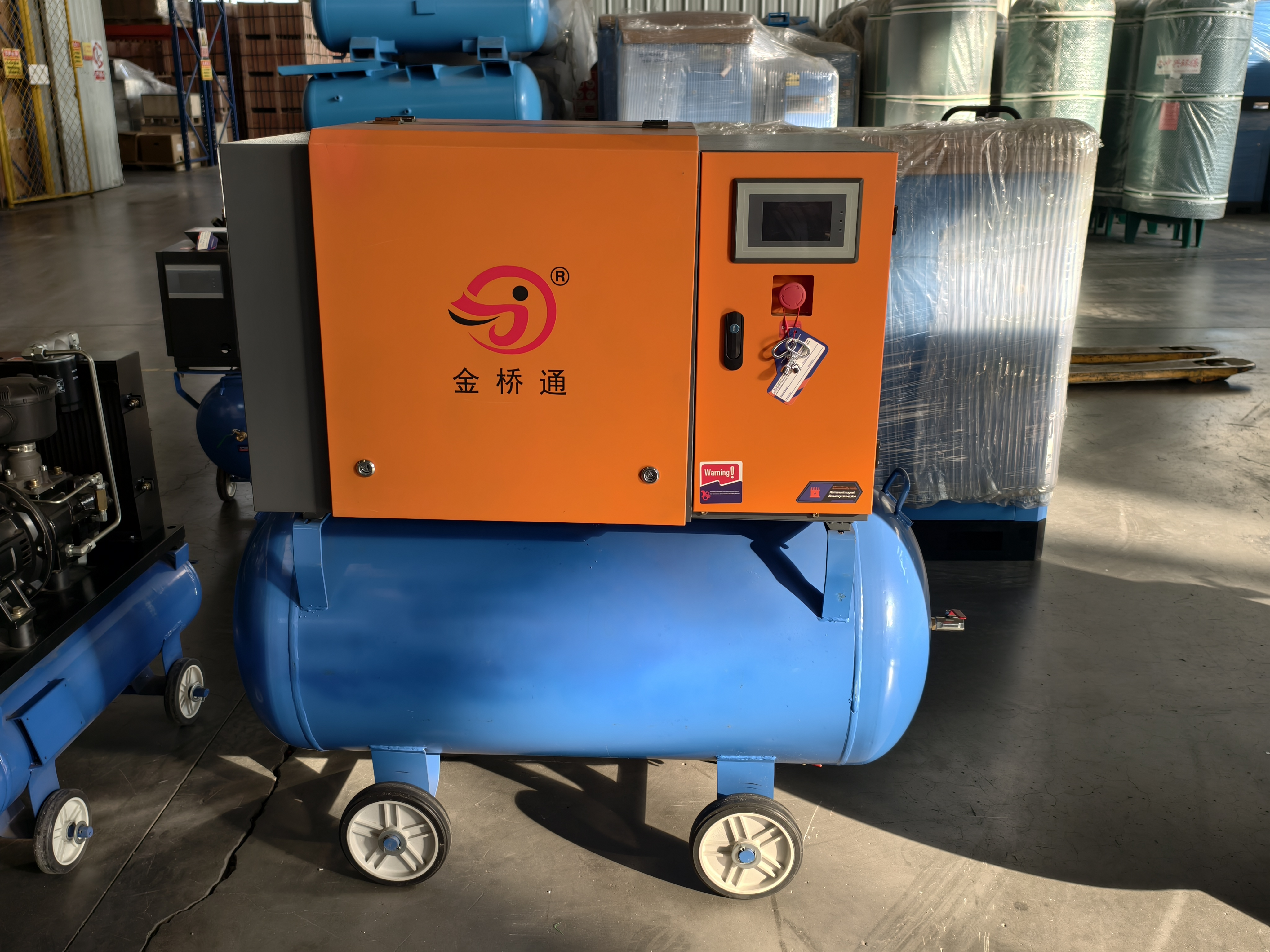
How Rotary Screw Design Enables True 100% Duty Cycle Operation
Screw air compressors achieve continuous operation through fundamental design differences from reciprocating models. Their twin helical rotors compress air in a single, uninterrupted motion—eliminating the start-stop cycles that plague piston compressors. This allows genuine 100% duty cycle capability, meaning they deliver consistent CFM and PSI indefinitely without cooling breaks. Industrial operations requiring non-stop air flow rely on this inherent advantage.
Eliminating Valves, Clearance Volume, and Reciprocating Stress
Rotary screw compressors remove critical failure points found in piston designs:
- No valves to fatigue or stick under thermal cycling
- Zero clearance volume, ensuring complete air displacement across compression stages
- Continuous rotation, replacing violent piston reversals and eliminating inertial stress on bearings and crankshafts
This mechanical simplicity directly extends service life. Piston compressors—even those “rated” for 100% duty—typically max out at 50–60% in practice, requiring rest periods to manage heat buildup from reciprocating part friction.
Thermal Stability and Consistent Isentropic Efficiency Under Sustained Load
The rotary screw’s oil-flooded design provides inherent thermal management:
- Lubricant continuously absorbs and dissipates heat, maintaining stable internal temperatures
- Precise rotor clearances remain consistent across operating hours, preventing efficiency decay
- Isentropic efficiency stays above 80% at full load (ISO 1217 verified), outperforming piston units that degrade under extended runs
This stability enables reliable peak performance in 24/7 manufacturing environments—where piston alternatives would require redundancy or face premature failure.
Energy Efficiency Comparison: Screw Air Compressor vs Piston at Scale
CFM/HP Performance Across Load Profiles (ISO 1217 Benchmarks)
Screw air compressors deliver superior energy efficiency compared to piston models, especially under sustained operation. ISO 1217 testing shows screw units generate 15–30% more CFM per HP during continuous operation. The gap widens at partial loads: screw compressors maintain near-peak isentropic efficiency, while piston units suffer volumetric losses due to fixed displacement and clearance volume. Field studies confirm facilities replacing piston compressors with screw models reduce annual energy consumption by 18–25%. Since energy accounts for 70–80% of total lifecycle costs in industrial settings (per U.S. Department of Energy industrial energy audits), this efficiency delivers substantial operational savings.
Variable-Speed Drive (VSD) Synergy: Why Screw Air Compressors Leverage VSD More Effectively
Screw compressors integrate seamlessly with Variable-Speed Drive (VSD) technology—a synergy piston units cannot match. Screw units maintain consistent efficiency across 40–100% capacity when paired with VSD, precisely matching output to demand and avoiding wasteful unloading cycles. In contrast, piston compressors experience sharp efficiency drops below 60% load and rely on inefficient start-stop cycling to modulate output. VSD-enabled screw compressors achieve up to 35% energy savings over fixed-speed equivalents in variable-demand applications. This stems from their continuous rotary motion, which allows smooth modulation without mechanical stress. Facilities implementing VSD screw compressors report payback periods under two years.
Long-Term Reliability and Total Cost of Ownership in Continuous-Duty Environments
MTBF, Maintenance Intervals, and Predictive Maintenance Readiness
For demanding industrial applications requiring constant operation, screw air compressors deliver significantly higher mean time between failures (MTBF)—often exceeding 30,000 hours versus under 10,000 hours for reciprocating units. This reliability arises from fewer moving parts, dynamically balanced rotating assemblies, and advanced oil-cooling systems that sustain stable operating temperatures. Maintenance intervals are typically 2–3 times longer than for piston equivalents, reducing labor costs and production downtime. Their standardized design also supports predictive maintenance technologies—including vibration sensors and integrated oil analysis ports—further minimizing unplanned outages. Over a 10-year horizon, the combined impact of energy savings, reduced maintenance, and extended lifespan makes screw compressors the economically superior choice for continuous-duty scenarios.
When a Piston Compressor Might Still Be Justified — And Why It’s Rare for Continuous Use
While rotary screw air compressors dominate continuous industrial applications, piston models retain niche justification in specific scenarios. Their lower initial purchase cost can make them viable for facilities with extremely tight capital budgets facing intermittent, low-demand tasks—such as small workshops using air tools for under 30 minutes per hour. Portability also favors piston units in mobile repair operations. However, their limited duty cycle (typically ≤50%), accelerated wear under sustained load, and inability to scale beyond ~30 HP render them impractical for continuous production. Thermal stress risks and steep efficiency losses beyond partial usage solidify screw compressors as the only technically and economically sound solution for uninterrupted operation.
FAQ
What is a rotary screw air compressor?
A rotary screw air compressor is a type of air compressor that uses twin helical rotors to compress air continuously without the start-stop cycles typical of piston compressors, enabling 100% duty cycle operation.
Why can’t piston compressors handle continuous operation?
Piston compressors generate significant heat due to reciprocating motion and have critical failure points like valves and clearance volume, limiting their practical duty cycle to 50–60%. They require rest periods to prevent mechanical damage.
How does thermal stability benefit rotary screw air compressors?
Rotary screw compressors use oil flooding to absorb and dissipate heat, ensuring stable internal temperatures. This stability allows consistent performance and efficiency during sustained high-demand operations.
What is Variable-Speed Drive (VSD), and why is it effective with screw compressors?
Variable-Speed Drive (VSD) technology modulates compressor output to match demand. Screw compressors maintain efficiency across a wide capacity range with VSD, avoiding wasteful unloading cycles and reducing energy consumption.
Why are screw compressors economically advantageous for industrial use?
Due to higher energy efficiency, extended service life, lower maintenance requirements, and compatibility with predictive maintenance, screw compressors deliver substantial long-term cost savings in continuous-duty environments.
Table of Contents
- How Rotary Screw Design Enables True 100% Duty Cycle Operation
- Energy Efficiency Comparison: Screw Air Compressor vs Piston at Scale
- Long-Term Reliability and Total Cost of Ownership in Continuous-Duty Environments
- When a Piston Compressor Might Still Be Justified — And Why It’s Rare for Continuous Use
-
FAQ
- What is a rotary screw air compressor?
- Why can’t piston compressors handle continuous operation?
- How does thermal stability benefit rotary screw air compressors?
- What is Variable-Speed Drive (VSD), and why is it effective with screw compressors?
- Why are screw compressors economically advantageous for industrial use?