 EN
EN


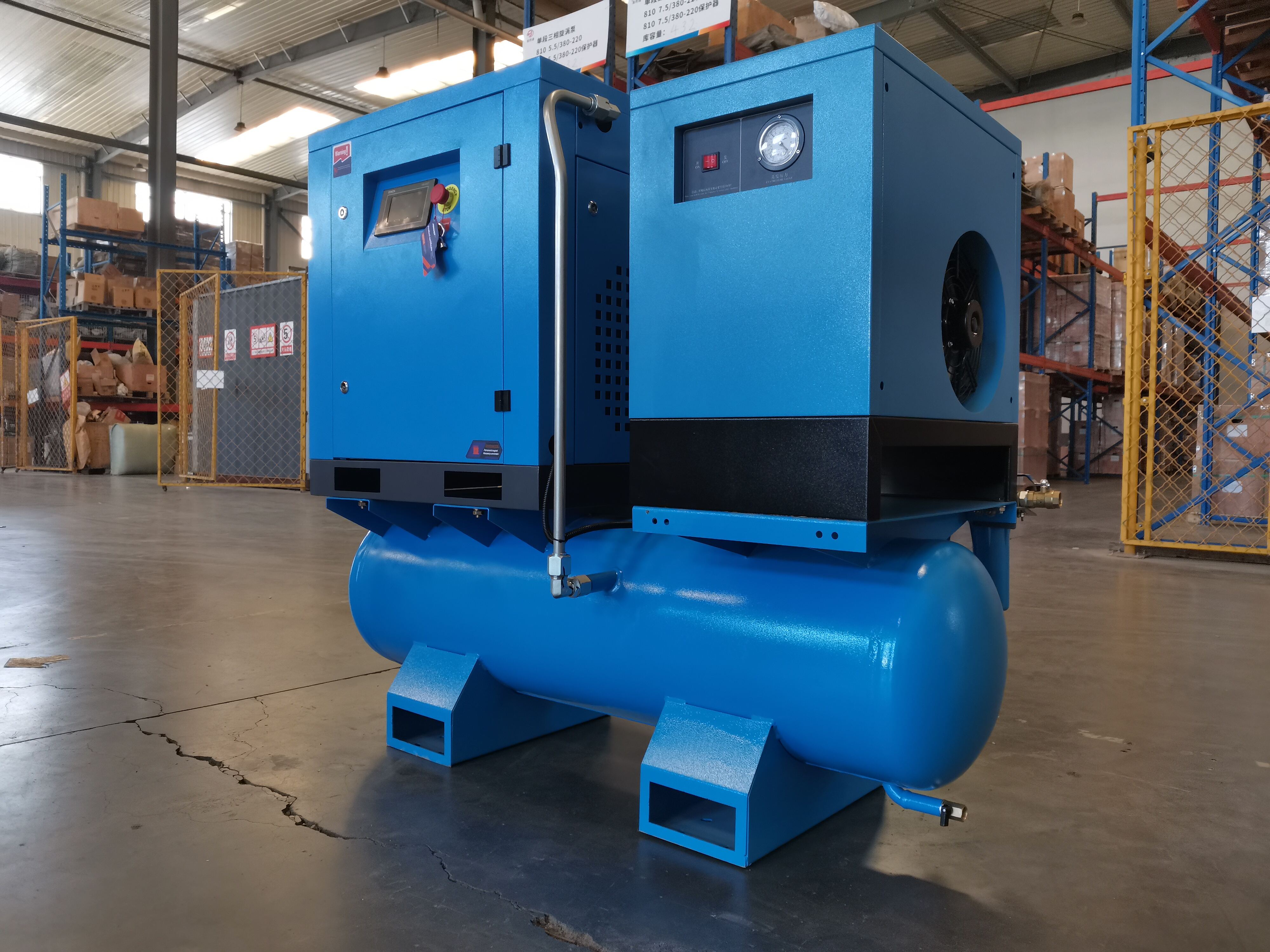
Air Quality Requirements: When Oil-Free Air Compressor Certification Is Non-Negotiable
ISO 8573-1 Class 0 vs. Class 1–2: Regulatory Thresholds for Food, Pharma, and Healthcare
ISO 8573-1 defines the internationally recognized purity classes for compressed air—critical for industries where contamination directly impacts safety, efficacy, or compliance. Class 0 certification mandates absolute oil-free air: zero detectable oil aerosols, vapors, or liquid (≤0.01 mg/m³ is not acceptable; true Class 0 requires verification of no measurable oil under defined test conditions). This standard is non-negotiable in pharmaceutical manufacturing, biotech cleanrooms, and medical device production—where even trace hydrocarbons can compromise sterility, alter drug formulation stability, or trigger regulatory action from the FDA or EMA.
Class 1 (≤0.01 mg/m³) and Class 2 (≤0.1 mg/m³) permit measurable oil content and are unsuitable for direct product contact or critical process air. Semiconductor fabrication, aseptic filling lines, and inhalation therapy equipment all require Class 0—not because of theoretical risk, but due to documented failure modes linked to oil carryover in non-certified systems. Crucially, Class 0 must be verified by independent third-party testing per ISO 8573-1 Annex C—not self-declared or based on “oil-free” marketing claims. Systems relying solely on coalescing filters—even high-efficiency ones—cannot guarantee Class 0 purity over time and are explicitly excluded from this classification.
Oil Carryover Risks: Impact on Product Safety, Equipment Longevity, and Environmental Compliance
Oil contamination in compressed air introduces cascading operational and regulatory risks. In food and beverage processing, aerosolized lubricants have triggered recalls averaging $740,000 per incident (Ponemon Institute, 2023), with brand damage often exceeding direct financial loss. Beyond product integrity, oil degrades downstream components: it saturates activated carbon filters up to 3× faster, accelerates microbial colonization in piping (especially in warm, humid environments), and increases filter replacement frequency by 37% (Compressed Air Best Practices Council, 2023). This undermines system reliability and inflates maintenance labor and parts costs.
Environmentally, uncontrolled hydrocarbon emissions from compressor discharge violate EPA Method 25A requirements for volatile organic compound (VOC) reporting—and may trigger permitting obligations under Clean Air Act Subpart OOOO. Oil-free compressors eliminate these risks at the source, supporting both regulatory compliance and corporate ESG goals without reliance on secondary abatement technologies.
Total Cost of Ownership: Balancing Upfront Investment and Long-Term Air Compressor Maintenance
Capex vs. Opex Breakdown: Oil-Lubricated (Lower Capex, Higher Maintenance) vs. Oil-Free (Higher Capex, Lower Lifecycle Costs)
Focusing solely on purchase price misrepresents true economic value. Energy consumption accounts for ~70% of a compressor’s total cost of ownership (TCO) over a 10-year lifecycle; maintenance contributes ~20%; and initial capital expenditure represents just ~10% (U.S. Department of Energy, Compressed Air Challenge Handbook, 2022). Oil-lubricated compressors offer lower upfront cost but incur recurring expenses: scheduled oil changes, separator/filter replacements, waste oil disposal (subject to RCRA regulations), and unplanned downtime from contamination-related failures.
Oil-free compressors demand higher initial investment—driven by precision-machined rotors, specialized coatings (e.g., PTFE or ceramic), and advanced cooling systems—but eliminate oil-related consumables and disposal costs entirely. They also reduce pressure drop across filtration (no coalescing filters needed), improving system efficiency by 1–2% versus oil-lubricated equivalents with full filtration trains. For continuous or quality-critical operations, the Capex premium is typically recovered within 3–5 years through lower Opex, fewer shutdowns, and avoided contamination events—making oil-free technology the more economical choice over the full asset life.
Duty Cycle Compatibility: Matching Air Compressor Design to Real-World Operational Demands
Understanding duty cycle—the ratio of operating time to total time in a given period—is essential for selecting a compressor that delivers reliability, efficiency, and longevity. Mismatched duty cycles accelerate wear, increase energy waste, and raise failure risk.
Continuous or Heavy-Duty Use: Thermal Stability and Bearing Life in Oil-Lubricated Systems
For 24/7 industrial applications—such as automotive assembly, metal stamping, or continuous packaging lines—oil-lubricated rotary screw compressors remain the benchmark for thermal resilience. Their integrated oil-cooling circuit stabilizes rotor and bearing temperatures during sustained operation, reducing thermal stress and extending bearing service life by up to 40% compared to air-cooled alternatives. Industrial-grade models are engineered for true 100% duty cycles, maintaining consistent pressure and flow under variable loads. However, this performance requires disciplined maintenance: oil analysis every 2,000 hours, separator replacement every 8,000 hours, and adherence to OEM lubricant specifications to prevent sludge formation or acid buildup.
Intermittent or Light-Duty Use: Efficiency and Reliability of Modern Oil-Free Scroll and Diaphragm Air Compressors
Applications with duty cycles below 60%—including dental clinics, laboratories, small-batch food prep, and light industrial workshops—benefit from modern oil-free scroll and diaphragm designs. Scroll compressors deliver rapid, quiet air delivery ideal for intermittent tool use, while diaphragm units provide pulsation-free, ultra-clean air for analytical instruments or calibration gas generation. These technologies generate minimal heat during start-stop cycling, eliminating oil degradation concerns and enabling extended service intervals. Maintenance costs run 30–40% lower than comparable oil-lubricated units (Compressed Air Audit, 2023), with no oil changes, separator replacements, or waste disposal logistics—making them operationally simpler and safer for environments where staff lack dedicated compressed air expertise.
Industry-Specific Air Compressor Selection Guidelines
Selecting the right air compressor technology requires aligning technical capabilities with sector-specific regulatory, operational, and safety imperatives:
Manufacturing: High-volume production lines (e.g., automotive, electronics) prioritize reliability and energy efficiency. Rotary screw compressors—oil-lubricated for general plant air, oil-free for paint booths or cleanroom supply—are common. Food processing facilities must use ISO 8573-1 Class 0-certified oil-free compressors for any air contacting product, packaging, or surfaces—per FDA 21 CFR Part 110 and SQF Code Edition 9.
Healthcare: Medical air systems (USP <1057> and NFPA 99) mandate 100% oil-free, Class 0-compliant compressors with redundant capacity and real-time oil vapor monitoring. Surgical tools, ventilators, and oxygen concentrators depend on uninterrupted, contaminant-free air—making reliability and certification non-negotiable. HVAC makeup air in operating rooms and isolation wards also requires oil-free supply to maintain ISO Class 5–8 cleanroom equivalency.
Construction: Rugged, mobile diesel-powered rotary screw compressors dominate for general site use. While oil-lubricated units suffice for framing nailers or grinders, sandblasting, coating preparation, and sensitive surface finishing increasingly specify oil-free variants—ensuring no hydrocarbon residue compromises adhesion, corrosion resistance, or coating integrity.
Frequently Asked Questions (FAQ)
Why is Class 0 certification critical for industries like food and pharmaceuticals?
Class 0 certification guarantees completely oil-free air, which is essential in industries where even trace oil contamination can compromise product safety, sterility, and regulatory compliance.
What are the key risks of oil carryover in compressed air systems?
Oil carryover can degrade product safety, damage equipment, increase maintenance costs, cause recalls, and violate environmental regulations such as VOC reporting requirements.
What factors should industries consider when selecting an air compressor?
Key factors include regulatory requirements, duty cycle, energy efficiency, maintenance costs, initial investment, and specific application needs (e.g., critical cleanrooms or high-volume manufacturing).
How does the cost of ownership differ between oil-free and oil-lubricated compressors?
Oil-free compressors have higher upfront costs but lower long-term operational expenses, as they eliminate oil-related consumables and improve system efficiency.
What makes oil-free compressors suitable for healthcare and pharmaceutical applications?
Oil-free compressors produce contamination-free air, which is non-negotiable for these sectors to meet strict regulatory standards and ensure product safety.
Table of Contents
- Air Quality Requirements: When Oil-Free Air Compressor Certification Is Non-Negotiable
- Total Cost of Ownership: Balancing Upfront Investment and Long-Term Air Compressor Maintenance
- Duty Cycle Compatibility: Matching Air Compressor Design to Real-World Operational Demands
- Industry-Specific Air Compressor Selection Guidelines
-
Frequently Asked Questions (FAQ)
- Why is Class 0 certification critical for industries like food and pharmaceuticals?
- What are the key risks of oil carryover in compressed air systems?
- What factors should industries consider when selecting an air compressor?
- How does the cost of ownership differ between oil-free and oil-lubricated compressors?
- What makes oil-free compressors suitable for healthcare and pharmaceutical applications?