 EN
EN


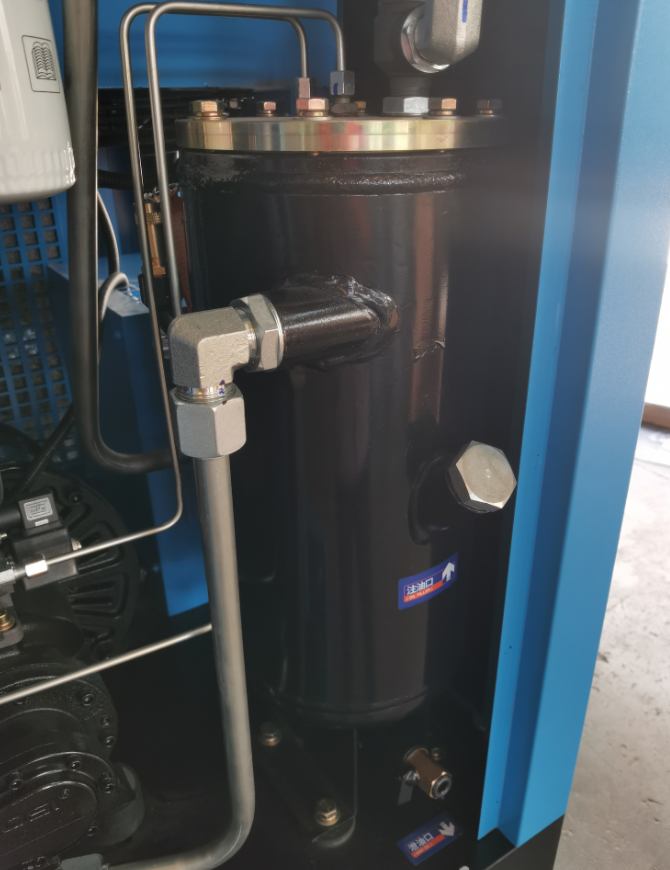
Unmatched Reliability and Continuous Operation for Industrial Production
The foundation of screw compressor reliability lies in its elegant rotary design. Unlike reciprocating alternatives that rely on pistons, crankshafts, and valves generating high vibration, intermittent flow, and frequent wear, the screw compressor uses two precisely meshed rotors rotating continuously in a single motion. This positive-displacement mechanism has far fewer moving parts, no internal valves, and delivers pulse-free airflow. Compared to centrifugal systems engineered for narrow, high-flow operating windows, the screw design maintains stable performance across a broad pressure range without surge risk. This combination of simplicity, smooth operation, and operational flexibility makes it uniquely suited for non-stop industrial production.
This design advantage translates directly into field-proven uptime. In mission-critical 24/7 facilities where a single hour of downtime can cost over 740000 dollars, screw compressors consistently deliver mechanical availability exceeding 99 percent when properly maintained. Their modular architecture enables in-situ servicing of bearings and the airend, minimizing disruption. This reliability is indispensable across continuous processes: automotive assembly lines halt without air, and chemical plants face severe safety and quality risks. For decades, leading manufacturers have specified screw technology as the standard for critical air supply not merely because it is capable, but because it forms the dependable backbone of plant-wide productivity.
Total Cost of Ownership: Energy Efficiency and Maintenance Savings
Energy dominates total cost of ownership, accounting for up to 75 percent of a compressor lifetime expense. Screw compressors reduce this burden significantly. Their continuous rotary motion avoids the frictional losses and start-stop surges inherent in reciprocating units, while advanced rotor profiles and tight internal clearances achieve specific power ratings below 5.5 kilowatts per 100 cubic feet per minute. When paired with variable-speed control and intelligent system sequencing, they match output precisely to real-time demand, eliminating wasteful idling and unload cycles. Over a 10-year horizon, these efficiencies translate into tens of thousands of dollars in avoided energy costs, making the screw compressor financially resilient.
Maintenance represents the second-largest total cost of ownership component, and here, screw compressors deliver structural advantages. With no valves, piston rings, or connecting rods to replace, major overhauls are required only every 60000 to 80000 operating hours, representing roughly 7 to 9 years of continuous operation. A closed-loop lubrication system continuously cools, seals, and cleans the rotors, extending component life and limiting oil changes to every 8000 to 12000 hours. Industry data shows maintenance costs for screw compressors are 30 to 40 percent lower than reciprocating equivalents over the same period. Fewer consumables, simpler diagnostics, and reduced labor requirements combine to shrink both scheduled downtime and long-term spend.
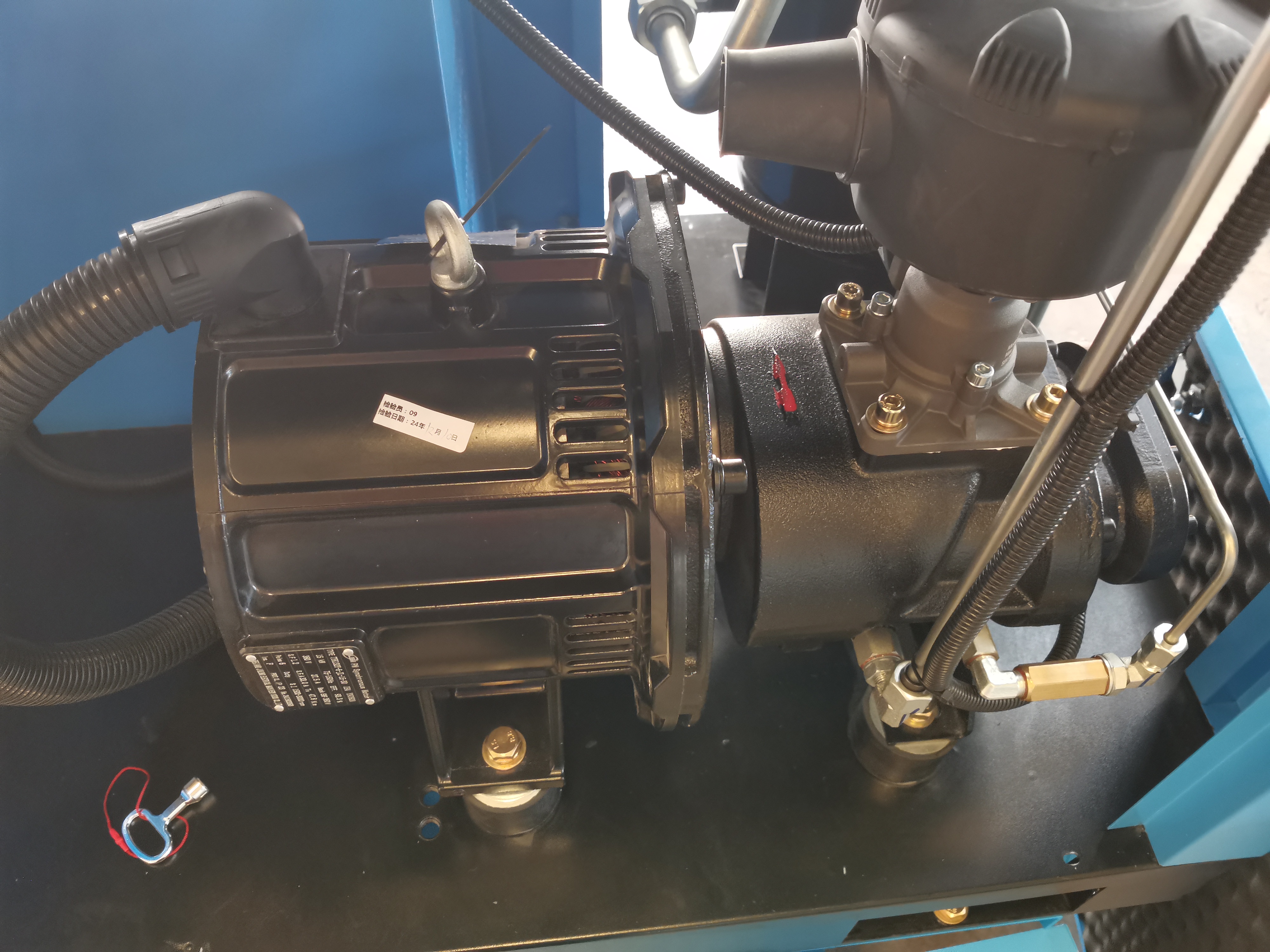
Precision Air Delivery and Variable Speed Drive Optimization
In aerospace, medical device manufacturing, and semiconductor fabrication, compressed air is a precision process medium. Even minor pressure fluctuations or contamination events can scrap entire batches or trigger regulatory non-compliance. Screw compressors deliver exceptionally stable, pulsation-free airflow, holding pressure within plus or minus 0.1 bar across varying loads. Their thermally stable operation minimizes temperature swings, while integrated filtration and oil separation support stringent air purity standards. This consistency is vital for laser cutting, cleanroom instrumentation, and pharmaceutical packaging. By eliminating the pressure spikes common in reciprocating systems, screw compressors protect sensitive equipment, reduce defect rates, and ensure repeatable product quality shift after shift.
Integrating variable-speed drive technology transforms a screw compressor from a fixed-output asset into an adaptive, demand-responsive system. Rather than cycling on and off or running unloaded, variable-speed drives continuously modulate motor speed to match real-time air demand, dramatically reducing energy waste. Using feedback from pressure sensors, the system adjusts motor rotations per minute in real time, slowing during low demand and ramping up smoothly as load increases. Unlike fixed-speed compressors that consume 30 to 70 percent of full-load power even when unloaded, a variable-speed screw unit draws only the energy required, delivering verified savings of up to 30 percent or more annually. This precise control reduces thermal and mechanical stress on components, extending service life across multi-shift manufacturing operations.
Frequently Asked Questions
-
What are the main advantages of screw compressors compared to reciprocating and centrifugal compressors? Screw compressors offer superior reliability due to their rotary design with fewer moving parts and pulse-free airflow, while maintaining stable performance across a broad pressure range without centrifugal surge risks.
-
How do screw compressors contribute to lower total cost of ownership? They reduce operational costs through higher energy efficiency and lower maintenance demands, requiring fewer major overhauls and featuring extended service intervals that minimize downtime and expenses.
-
Why is variable-speed drive technology important in screw compressors? Variable-speed drive technology optimizes energy use by adjusting motor speed to match real-time demand, reducing power waste and extending the service life of key internal components.
-
Which industries benefit most from screw compressors? Industries requiring precision air delivery, such as aerospace, medical device manufacturing, and semiconductor fabrication, benefit the most due to stability, high purity support, and pulsation-free airflow.