 EN
EN


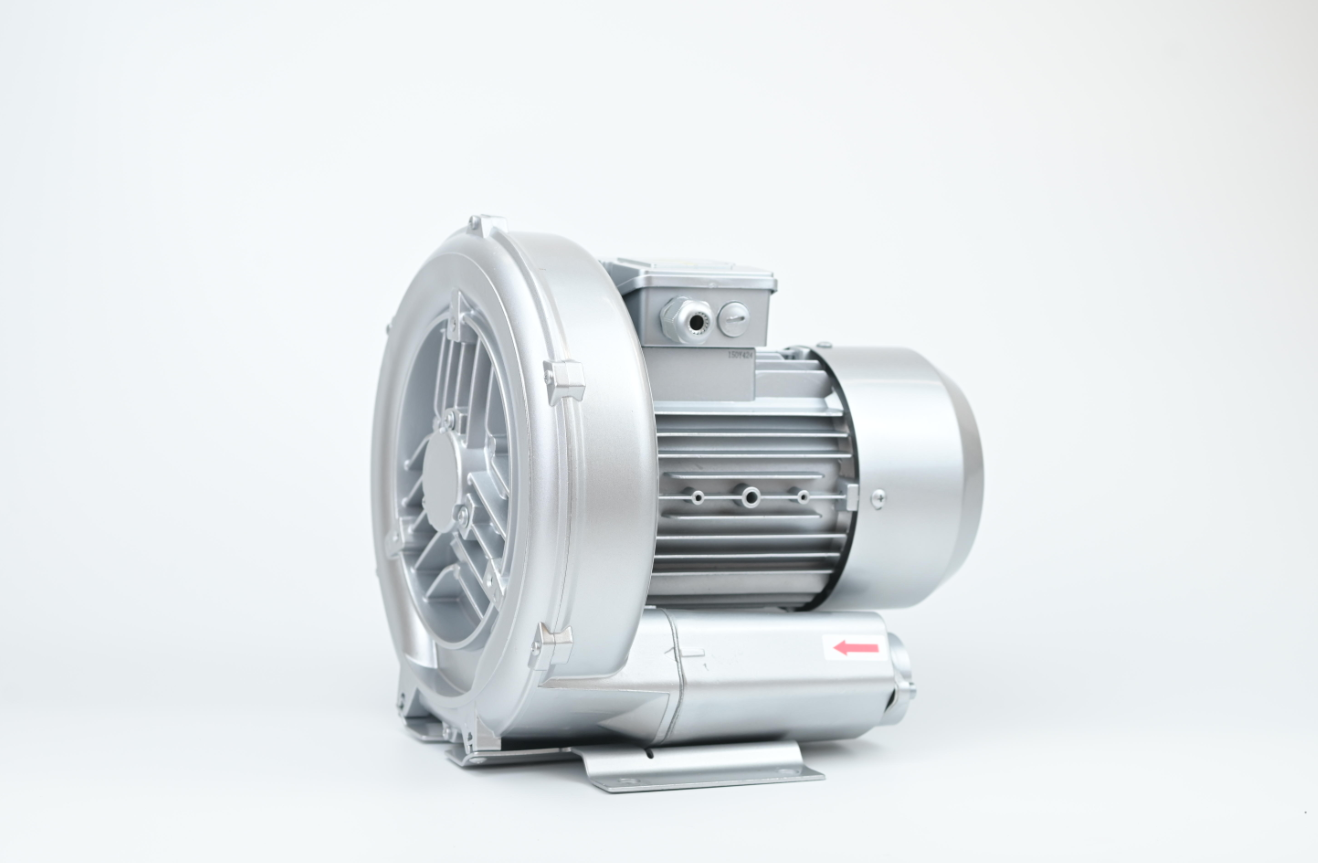
Why Standard Cubic Feet per Minute Ratings Fail for Regenerative Blower Sizing in Aquaculture
Relying on a regenerative blower's free-air cubic feet per minute rating is a fundamental sizing error. This value represents maximum flow under zero-resistance laboratory conditions, discharging directly into the atmosphere, and bears little resemblance to real-world aquaculture operation. In practice, the blower must overcome substantial back pressure from water depth, piping friction, and diffuser resistance. That pressure opposes airflow, causing actual delivered volume to drop sharply, meaning a blower rated at 100 cubic feet per minute in free air may deliver only 40 cubic feet per minute at 3 pounds per square inch of system pressure. Performance curves, rather than nameplate ratings, dictate this nonlinear derating. Ignoring it guarantees undersizing, risking failure to meet critical oxygen demand.
Aquaculture imposes a uniquely demanding duty cycle absent in most industrial or heating, ventilation, and air conditioning applications. Here, the regenerative blower is not a supplemental tool; it is a life-support system operating continuously, 24 hours a day, 7 days a week, with zero tolerance for unplanned downtime. Failure triggers cascading biological consequences because dissolved oxygen levels drop within hours, threatening stock survival. Unlike systems that cycle on temperature or handle intermittent loads, aquaculture requires steady-state delivery to maintain precise dissolved oxygen levels amid dynamic metabolic demand driven by feeding rates, temperature, and biomass. This constant load against static hydrostatic head creates thermal and mechanical stresses distinct from variable-duty processes, making continuous-duty reliability paramount.
Calculating True Airflow Capacity: Integrating Depth, Friction, and Diffuser Resistance
To size a regenerative blower correctly, operators must move beyond free-air ratings and quantify the total resistance, known as the Total Dynamic Head, that the blower must overcome. Total Dynamic Head comprises hydrostatic pressure from water depth, friction losses in air piping, and pressure drop across diffusers. Only by integrating these elements can you locate the true operating point on the manufacturer certified performance curve.
| Total Dynamic Head Component | Typical Pressure Range | Notes |
| Hydrostatic pressure | 2.99 kilopascals per 0.3048 meters depth | Dominant factor, scales linearly with depth |
| Pipe friction losses | 0.5 to 2.0 kilopascals per 30 meters of pipe | Increases with flow, smaller diameters, and fittings |
| Diffuser pressure drop | 2.5 to 5.0 kilopascals for ceramic discs | Highly dependent on diffuser type, age, and maintenance |
Consider a 15000-liter tank with 2.4 meters of water depth. Hydrostatic pressure equals 2.4 meters multiplied by 2.99 kilopascals per meter, yielding 7.18 kilopascals. A 30-meter run of 25-millimeter polyvinyl chloride pipe with standard fittings incurs approximately 1.2 kilopascals of friction loss at 50 liters per minute. The ceramic disc diffuser contributes 3.5 kilopascals of pressure drop, bringing the total Total Dynamic Head to 11.88 kilopascals, which is approximately 47.7 inches of water column. At this pressure, a blower rated for 50 liters per minute at zero backpressure will likely deliver only 30 liters per minute, which is insufficient for required oxygen transfer. Selecting a model with a flatter, more robust pressure-flow curve ensures stable delivery at the target flow and pressure.
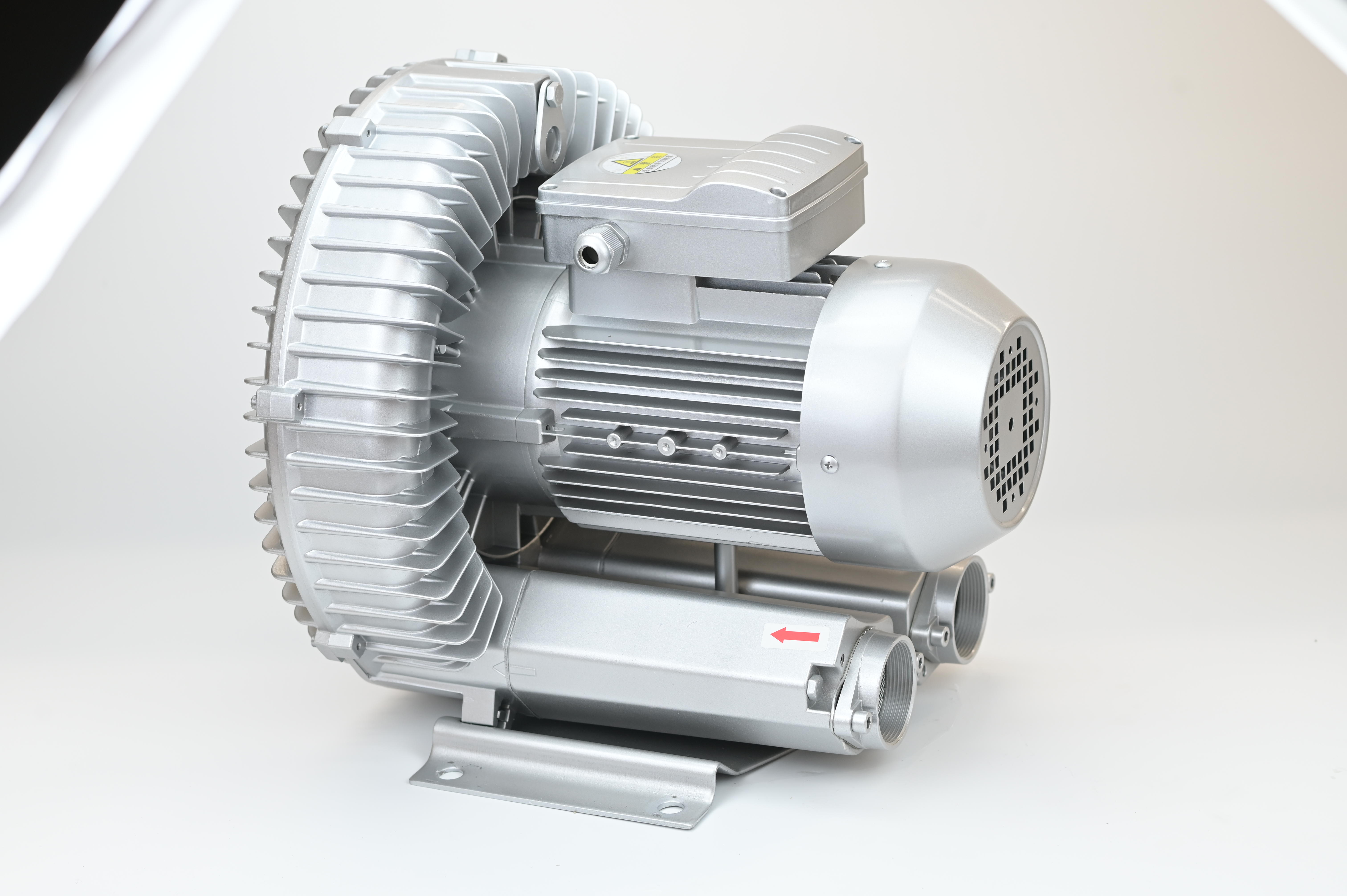
Avoiding Costly Mistakes: Consequences of Oversizing and Undersizing
An oversized regenerative blower induces short-cycling, which consists of rapid start-stop cycles triggered by premature pressure setpoint attainment. Each motor restart generates heat and mechanical stress, degrading winding insulation and potentially initiating thermal runaway, a self-reinforcing loop where rising temperature increases resistance and further elevates heat. Energy efficiency plummets as the unit operates far from its best efficiency point, raising utility costs. Axial bearing loads spike during repeated starts, and research shows bearing life can decline by 60 percent within six months when subjected to 20 starts per hour versus continuous operation. In aquaculture, such unreliability translates directly to emergency downtime, lost stock, and unplanned capital expenditure.
Conversely, an undersized blower fails to overcome system backpressure, resulting in chronic dissolved oxygen deficits below the 5 to 6 milligrams per liter threshold required for healthy finfish culture. Prolonged hypoxia suppresses immune function, impairs digestion, and reduces feed conversion ratios, eroding growth and survival. A 2022 tilapia trial demonstrated 22 percent lower weight gain and elevated cortisol after just two weeks at 3 milligrams per liter of dissolved oxygen. Beyond direct physiological harm, insufficient airflow causes uneven diffuser performance, creating dead zones where organic waste accumulates and ammonia spikes. Biofilter nitrification falters without adequate oxygen, destabilizing the entire recirculating aquaculture system.
Frequently Asked Questions
-
Why is free-air cubic feet per minute misleading when sizing regenerative blowers in aquaculture?
Free-air ratings measure performance under zero-resistance conditions, which is unrealistic in aquaculture due to system back pressure from water depth, diffuser resistance, and piping friction.
-
What is Total Dynamic Head in the context of aquaculture systems?
Total Dynamic Head combines hydrostatic pressure, pipe friction losses, and diffuser resistance to represent the total back pressure a blower must overcome to deliver airflow.
-
How can oversizing a regenerative blower affect aquaculture operation?
Oversizing can lead to short-cycling, reduced efficiency, accelerated wear, and may cause thermal runaway, compromising reliability and increasing operating costs.
-
What consequences arise from undersizing a regenerative blower?
Undersizing leads to inadequate dissolved oxygen levels, stress on aquatic stock, and reduced biofilter performance, significantly affecting system stability and stock growth.