 EN
EN


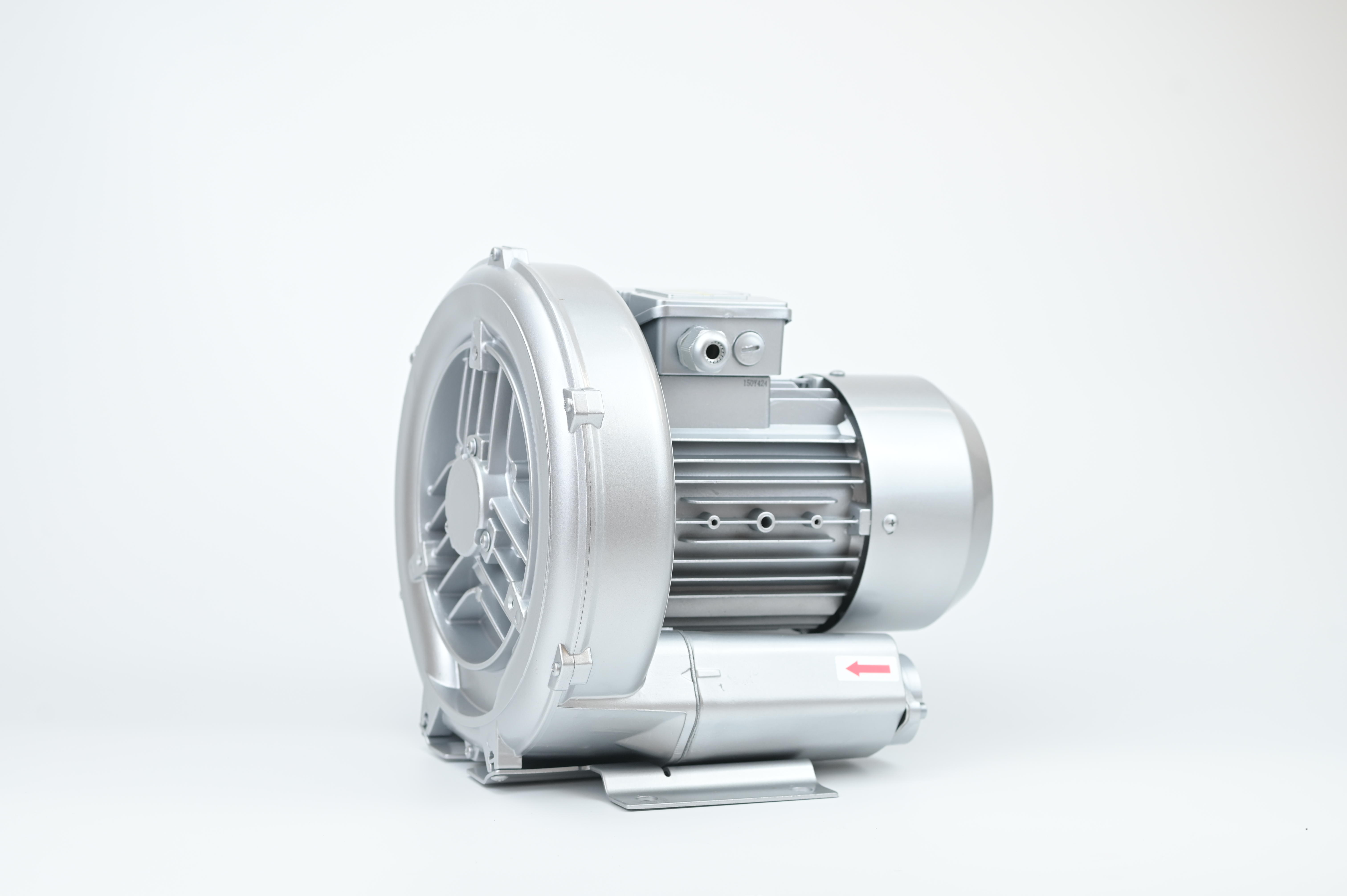
The Most Important Trade-off: How to Manage Suction Power and Noise in Vacuum Blowers.
Why Higher CFM or Lower Ultimate Vacuum Tends to Bring About Higher dB(A): Physics and Real-World Constraints.
When there is an increase in airflow ( measured in CFM) or deeper vacuum levels, more power is ultimately required to run the system, and noise will increase in three fundamental ways, First, the motor has to spin faster to produce the higher levels of power which will generate the high pitched annoying sounds, Second, The airflow in the suction points will become more turbulent and all of the chaotic flow will increase the airflow noise to the cube of the speed of the airflow, Lastly, resonance occurs on parts of the system which will act like a drum, and this occurs mainly in the seals and housings as the pressure builds in the flow system. Because the decibel scale is based on logarithms a relatively small increase in CFM (around 10%) can lead to a noise measurement increase of 3 to 5 dB(A). Although this does not seem like a high value, it is perceived as twice as loud to the human ear. When stresses exceed the design limits of the structure and the airflow exceeds the design limits of the flow container, practical issues begin to arise. Industrial vacuum blowers are a good example of this.
Designing for a target vacuum level of around 25 kPa typically results in noise levels in the 75 dB(A) range, illustrating the unavoidable compromise engineers face with noise and performance.
Benchmark Data: Performance Confirmed Pairs of Leading Vacuum Blower Models
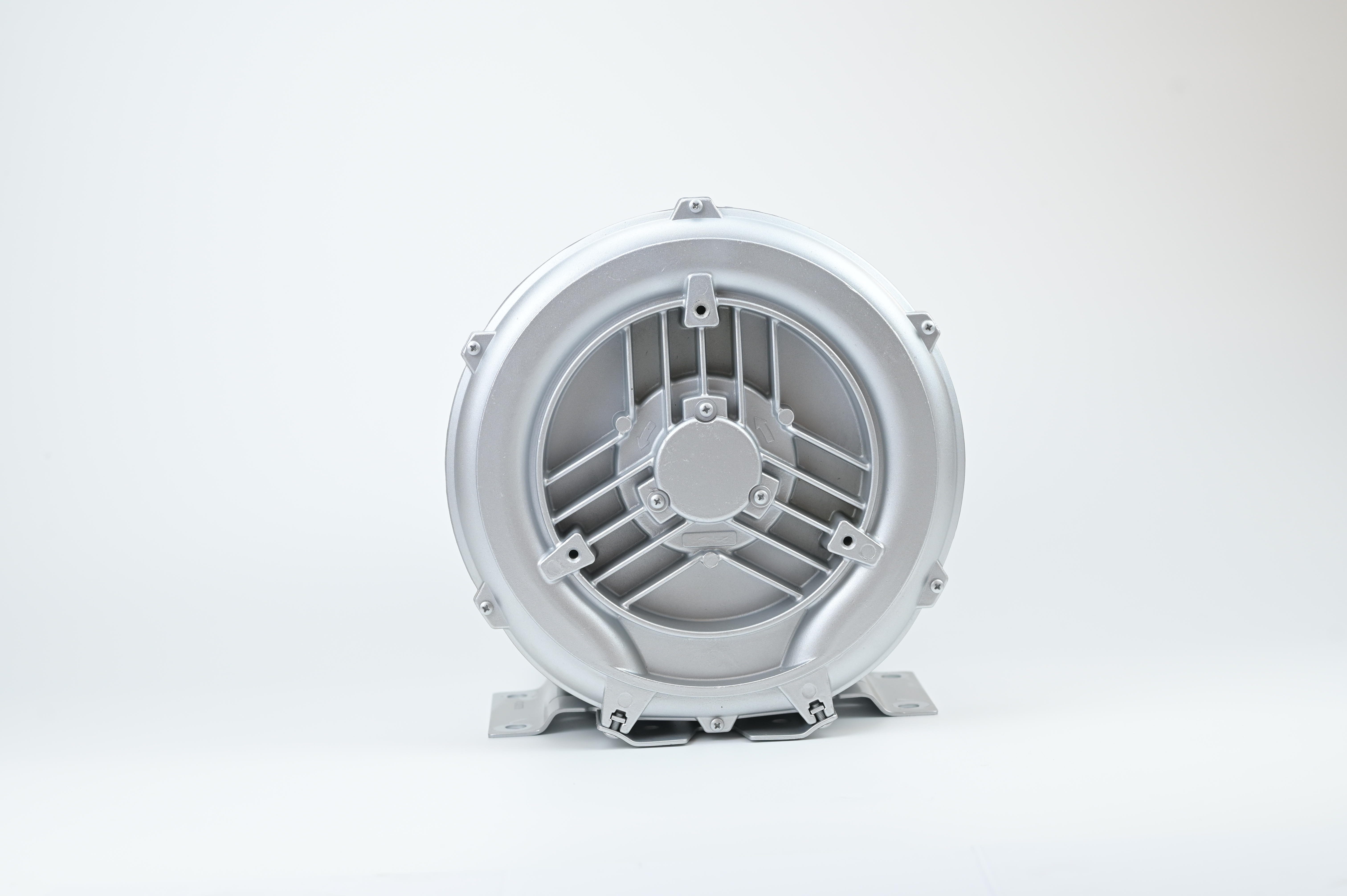
Independent test-audit reports for industrial models consistently validate suction and noise correlation:
CFM Range Ultimate Vacuum (kPa) Noise Level
40–60 15–18 65–70 dB(A)
80–100 20–23 75–80 dB(A)
120–150 25–28 82–87 dB(A)
Equipment designed for more than 100 CFM also tends to exceed 80 dB(A), the threshold at which OSHA requires hearing protection for workers. Looking at larger models, the gap in performance between a good model and a great one actually shrinks. Even the fancy models are limited to reducing noise level by about 3 to 4 dB(A) compared to standard models because of limitations in sound control technology. What does this mean? If a model has a high suction rating, we need to design with noise in mind from the start. We cannot use cheap noise-dampening technology to mask the issue since it will provide minimal visible impact.
True Suction Power: Metrics Beyond the Marketing Hype
Sealed Suction (kPa) and Open-Air Flow (CFM): Significance of ISO 5801 and ISO 21890 Certifications
There are a couple key metrics for measuring the performance of vacuum blower systems. One of these is *sealed suction*, which is measured in kilopascals (kPa), which indicates the level vacuum (or pressure) the system can generate with no flow (i.e. no material is passing through the system). This is a significant factor when considering (i.e. pumping) materials such as wet sludge or sticky materials. The other metric is *open air* (CFM), or airflow measured in *cubic feet per minute*, which indicates the volume of freely moving air through the system; this measurement is most significant when considering the system's performance while processing light particles and dust. Often when advertising their products, manufacturers focus on and promote one of these metrics; unfortunately, this practice creates a significant information disparity and prevents a complete and accurate understanding of their products. This is why standards are so important. With vacuum technology, ISO 21890 is one of the standards that allows manufacturers from marketing their products based on inaccurate or incomplete model performance metrics. ISO 5801 is the equivalent standard for industrial fans. Unlike vacuum technology, product claims in these industries are often tested by independent laboratories, which have historically demonstrated performance discrepancies of 15–30% from the claims made by the manufacturers. This is why it is important to view the complete picture: look at (i.e. bottom line) both of these performance metrics.
In general, units with sealed suction less than 45 kPa are not going to perform well on the more difficult jobs. However, if the unit delivers over 90 CFM than you can expect positive results for the handling of larger quantities of material.
Air Watts as a Practical Indicator: Deriving Real Cleaning Force from Electrical Input and Static Lift
The Air Watt (AW) figure rating helps connect what goes into a vacuum system electrically with what actually comes out mechanically, and gives us something tangible to measure when it comes to real cleaning power. The formula is essentially, airflow times pressure divided by 8.5, and this calculation considers all those little losses that occur within the system. Just motor wattage doesn't paint the whole picture and gives way to several problems such as worn seals, inefficient impellers, or not well-designed ducts. Consider a typical 1,200 watt blower. With all the losses considered, it may only deliver in the order of 300 AW of actual suction power. Independent tests show that machines with more than 350 AW tend to do well in dirt pick up in troublesome areas like carpets or tight corners, while models with less than that threshold tend to struggle in those areas. Any buyer for industrial vacuum equipment should place a high priority to AW ratings that have been tested by 3rd parties.
Machines with AW figures between 220 and 450 are able to make better estimates for operational performance, because these numbers are more indicative of day to day performance than sticker specs.
Industrial Vacuum Blowers and Noise Control
One of the major challenges for industrial vacuum blowers is developing strong suction while also keeping occupational noise levels in check. Innovative noise control is achievable through integrated solutions rather than retrofits, blending new motor designs with advanced acoustic treatment.
Noise Levels Compared: Brushless DC Motors Produce 8–12 dB Less Noise than Induction Motors at the Same Load Brushless DC (BLDC) motors eliminate noise at the source by removing the mechanical components responsible for the vibrations and sounds associated with traditional induction motors. Unlike induction motors, BLDC motors do not have brushes and therefore will not produce the associated “rubbing” sounds. They also provide better and more refined electromagnetic control of torque, resulting in lower overall heat generation. In controlled tests with similar air flow and vacuum BLDC systems produce 8 – 12 decibels lower noise. In practical terms, people perceive the noise as about 60% lower. Most importantly, there is no trade off in BLDC system performance. Even with lower noise levels, BLDC motors will maintain the same high performance levels that are necessary. Shops and factories that adopt BLDC technology often have compliance with the OSHA noise exposure limits during an 8-hour work shift. Additionally, facility managers that have made the transition to BLDC technology have also reported a higher degree of worker concentration and a lower degree of work fatigue.
Acoustic Engineering That Works: Volute Design, Composite Housing, and Resonance Suppression
In addition to motor selection, we have implemented three particular solutions for acoustics to achieve significant and scalable reductions in noise:
Volute optimization: Spiral casings that have been optimized through computational fluid dynamics (CFD) cause a reduction of 15-20% in aerodynamic noise without a loss in CFM due to the reduction of flow separation and turbulence;
Composite housing: enclosures made of fiber-reinforced polymer absorb high-frequency sounds and do not reflect them like a metal housing would, thus, lowering the noise of the casing; and
Resonance suppression: Vibration isolating mounts and damping materials disrupt a significant portion of the structural harmonics and are especially effective at mitigating the low-frequency “hum” that is commonly present in metal-housed units.
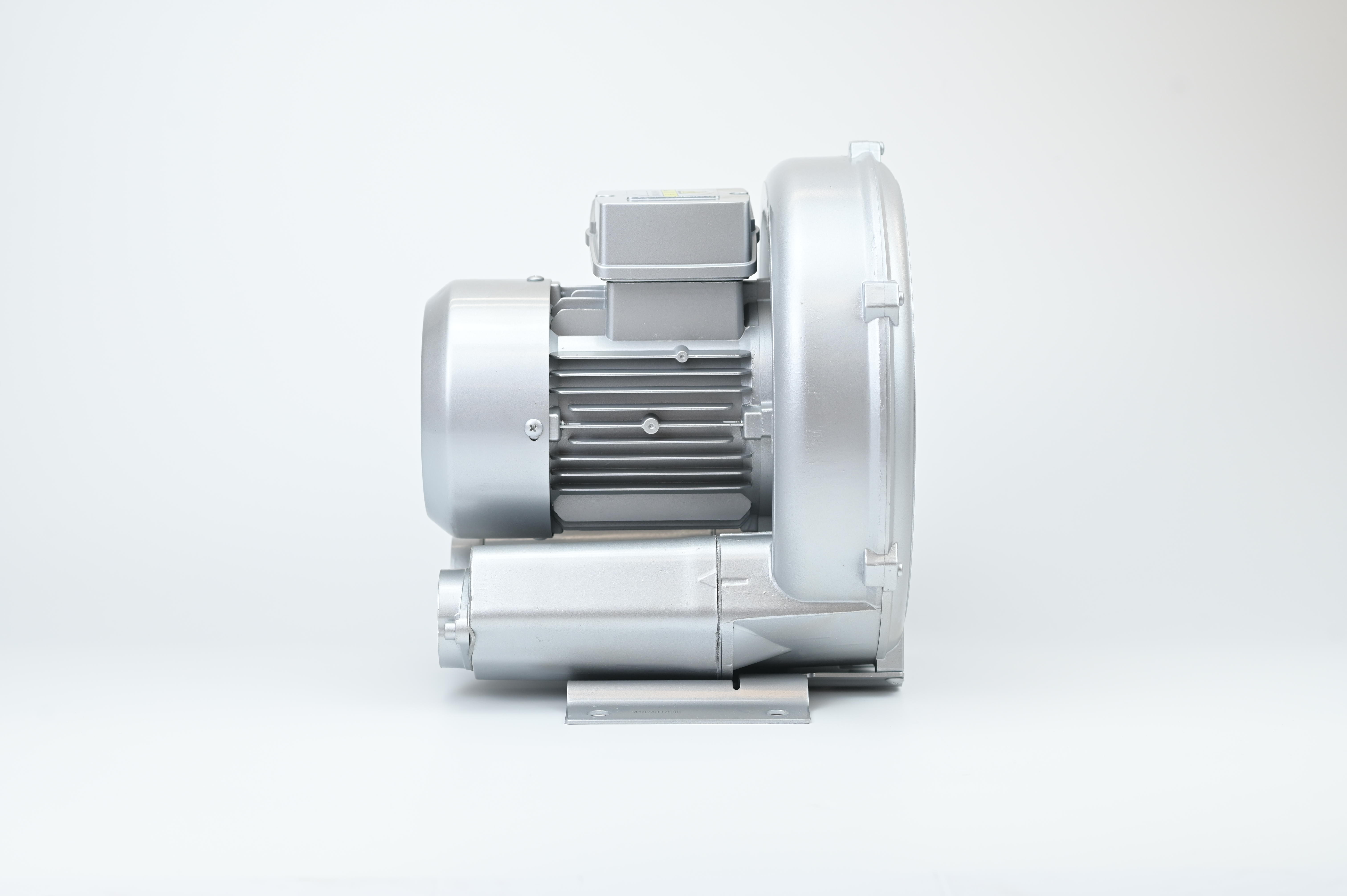
Combined, these methods provide up to 10 dB(A) of noise reduction while maintaining suction performance and are a proven combination of materials science, fluid dynamics, and mechanics.
Vacuum Blow Technology: An Overview of the Advancements of Quiet and High-Performance Operation
Traditionally, strong and high level suction power have been difficult to balance without risk of contamination and high levels of noise. The latest dry scroll technology, however, has the ability to remove contaminants without the concerns of lubricant oil being released. Because of the precise engineering utilized to develop oil-less compression, levels of less than 50kPa vacuum can be attained, and, scroll units typically run 8-15 decibels lower than oil-injected piston blowers of the same CFM. This technology is particularly important in the Pharmacutical industry, where contaminants and tiny particles can ruin entire production runs. Because the compression cycle is continuous and friction is reduced, the decibel levels of these units is greatly reduced. Having less oil to expend and to filter, these systems also suffer from a lower total cost of ownership, with an average savings of 40% compared to the traditional systems. By lowering the risk of contamination with equally lower noise levels and improved suction performance, these systems are a great improvement.
It's easy to see why they are being used in labs, cleanrooms, and other places where operational silence and contamination control are of utmost importance.
FAQ
How does a higher CFM affect the noise levels of vacuum blowers?
Higher CFM in vacuum blowers translates to more noise because of the faster speed of the motors. For example, more air gets sucked blown which in return creates more pressure and causes parts of the unit to resonate, which typically translates to a higher noise level of 3 to 5 dB(A).
What is the importance of the ISO 5801 and ISO 21890 certifications in vacuum blowers?
These certifications are important because they keep manufacturers from providing false claims. They guarantee a manufacturer’s claims concerning both sealed suction and open air flow.
How do noise levels of Brushless DC motors compare to traditional motors?
Brushless DC motors are quieter because they do not use mechanical contacts (brushes) which minimizes vibrations. They also don't generate as much heat, so suction power is more consistent.
What are the advantages of using oil-free vacuum blowers?
Oil-free vacuum blowers are less of a contamination risk and provide a greater level of suction compared to other vacuum blowers. For this reason, they are the optimal choice for sanitary environments.
Table of Contents
- Why Higher CFM or Lower Ultimate Vacuum Tends to Bring About Higher dB(A): Physics and Real-World Constraints.
- CFM Range Ultimate Vacuum (kPa) Noise Level
- Air Watts as a Practical Indicator: Deriving Real Cleaning Force from Electrical Input and Static Lift
- In addition to motor selection, we have implemented three particular solutions for acoustics to achieve significant and scalable reductions in noise:
- Vacuum Blow Technology: An Overview of the Advancements of Quiet and High-Performance Operation
- FAQ