 EN
EN


Displacement and FAD are two methods of measuring the performance of an air compressor. Manufacturers typically stick to displacement. Displacement is merely theoretical; it describes what the pump would do in a perfect world. FAD is a measurement of what is actually delivered at standard conditions (roughly 14.5 PSI, 68 °F, and no humidity). Displacement is a problem because it neglects lots of real world losses such as heat, internal leaks, and pressure drops in the system. For example, displacement can be 30% higher than what would be a real-world measurement. Consider a 25-horsepower unit that is labeled as having 100 CFM displacement. Due to the effects of the ideal gas law and adiabatic compression, at 100 PSI operation, it will be 70 CFM FAD at most. For a FAD or FAD testing, maintaining a working system will be important. Pneumatic sanders work within a range of 8 to 12 CFM, impact guns are most effective with 5 to 7 CFM, and spray guns tend to need 10 to 15 CFM.
When we perform the calculations correctly, we can prevent the incident of tool stalls or needless cycling on and off.
Pressure Stability and Control Band Tolerance: Keeping Pressure Consistent with a Changing Load
Control Band Tolerance determines how steady a compressor can hold a given pressure. For critical industrial applications, reliable systems should hold pressure within 2 PSI, above or below, any target pressure. Wider bands (10 PSI) lead to tool malfunction and critical workflows losing reliability. Consider spray painting, where desired pressure is between 40 to 60 PSI: a 10% deviation from target pressure leads to improper atomization, poor finish quality, and variability impacts work quality. This is why variable speed drive (VSD) compressors have gained popularity. Unlike older models, that turned On and Off, VSD models adjust motor speed based on current demand. Such designs improve pressure consistency better than fixed speed units that swing between 90 and 110 PSI.
Tight control saves the most electricity as well as reduces strain on the system’s critical components such as bearings & valves when the system is not operating at full capacity. In fact, some tests, based on standard testing protocols, show savings could be achieved in the realm of 35% under these conditions.
Energy Efficiency and Lifecycle Cost: Understanding SER, ISO 1217 and the Practical Use of Energy
Specific Energy Requirement (SER) and ISO 1217 Testing: Standardized Measures of Efficiency for Air Compressors
The most complete single measure for estimating the true efficiency of a compressed air system is the Specific Energy Requirement (SER) and is reported in kWh per m3 of compressed air produced. While some manufacturers like to advertise the horsepower or displacement of their units, this is not the complete picture. SER is unique in that it shows compliance to ISO 1217:2016 standards, which constitutes empirical data in a real operating environment, unlike laboratory testing. This means that SER considers the complete system and not just the compressor. This includes variable load conditions, pressure drop across the system, inlet temperature variations, and filter losses (as in losses that marketing claims) that laboratory testing ignores. Plants that use SER data ISO 1217 certified typically achieve 15-30% energy savings as they are equipped to meet their actual operational requirements as opposed to oversizing to a maximum capacity that is only used on a rare basis.
Energy is involved in 70-80% of lifetime costs of a compressor (U.S. Department of Energy and Compressed Air Challenge analysis). Therefore, cost-driven decisions about compressor type are driven by compressor Energy, especially when considering the return on investment (ROI) when upgrading to VSD units due to dynamic load management resulting in better kWh/m³. ISO 1217 assessment looks at 3 main focus areas:
Full and partial load adiabatic efficiency
Pressure drop limits across coalescing and particulate filtration
Control system efficiency during rapid demand changes
The SER “efficiency gap” is closed by certified testing. Uncertified models are known to consume 25% more energy than what is advertised (and due to the lack of ISO 1217, a combined loss premium is unavoidable).
Compressed Air Quality compliance: Application of standards to ISO 8573-1.
Effect of the Three Main Air Contaminants on the Reliability of Your Air Compressor System.
The big three troublesome contaminants of the compressed air system are moisture, particulates, and oil, and they have a great impact on the reliability of the system. Because of the presence of contaminants, air particles can cause premature wearing of pneumatic tools and valves. Corrosion is a huge concern for most moisture receivers, dryers, and various piping systems. In a 2024 study from the Fluid Dynamics Institute, moisture is the cause of 23% of air system failures in factories. Oil in the form of aerosols can, on the other hand, destroy the balance of lubrication and even worsen the situation by contaminating the finished products. Neglecting contaminants, on average, provides the company's machines almost 50% of their failures in less time. Filtering and drying equipment that meets the ISO 8573-1 standards is the best solution for these problems. Equipment compliance systems are about 40% more effective than simplicity systems in avoiding costly downtime.
Class-Based Requirements: Why Food, Pharma, and Industrial Tools Need Different ISO 8573-1 Air Compressor Certifications
The ISO 8573-1 standard defines air purity by establishing an air contamination control class. Class 0 is the most stringent and Class 5 is the most lenient. These standards are completely risk-based for the particular application. In food and drug manufacturing, they have to conform to Class 0. This means complete absence of any detectable oil content to 0.01 milligrams per cubic meter. Companies have to do continuous monitoring, and use specialized oil free compression equipment to comply. In contrast, most general industrial tools are perfectly functional at Class 3 or 4 standards where the oil content is kept under 5 mg/m³, the size of the particles is above 1 micrometer, and the dew point is about minus 20 degrees Celsius. In this case, the objective is to maintain stable pressure rather than achieving a specific purity level. In terms of performance, Class 0 compliant systems cause 98 percent fewer product recalls at pharmaceutical companies while the best cost-performance ratio in automotive factories is achieve with Class 3 systems.
Prompting classifying air quality as a real risk allows avoidance of real hazards and avoidance of unnecessary expense specification.
Quality of Construction and Serviceability: Reliability of Long-Term Air Compressor Functioning
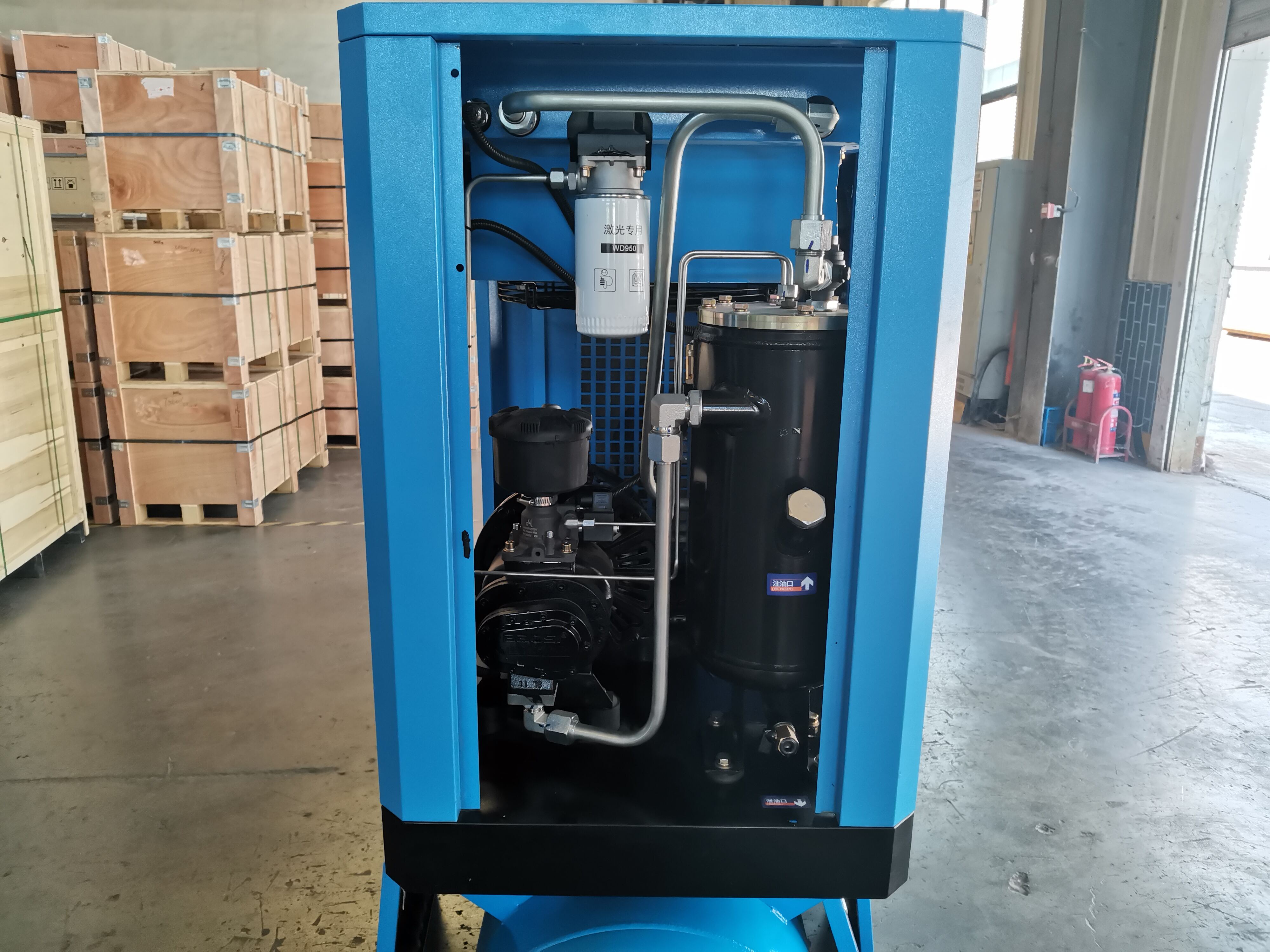
The quality of the construction determines how long the machine is going to last. The best machines have industrial cast iron for their compression chambers, hardened steel valve plates and precision machined rotors. These components are made to withstand all kinds of stresses over a long period of time including temperature variations, constant vibration and rapid stress changes. In contrast cheap machines that are made with thin sheet steel casings and plastic intake valves tend to fail much sooner. After 18 to 24 months of continuous running, these inferior components will show a large amount of wear and tear. When manufacturers focus their efforts on incorporating durability in their designs from the very beginning, they are rewarded greatly. Maintenance records show that well designed systems can reduce the frequency of unexpected failures by as much as 40%. This translates to less work interruptions, and in the long run more savings for companies that have to use the equipment on a daily basis.
Customer focused service design ensures equipment running strong over time. For example, front-access panels, modular control boards, universal fasteners, and tool-less filter replacement make maintenance easier and quicker. These time savings and maintenance design features aid in reducing service time by 50%. Optimized equipment design not only reduces service time, it ensures parts are readily available via the global supply chain. Additionally, parts are frequently warranted for 2 years and even up to 5 years for airend components. For equipment that relies on high-quality components and service design to be reliable, it reduces the impact on customers' production and financial losses from service disruption.
FAQ
What is Free Air Delivery (FAD) in air compressors?
Free Air Delivery (FAD) is the measure of air delivery from a compressor adjusted for standard conditions and real-world losses.
Why is pressure stability important in air compressors?
Pressure stability is important as it allows for stable functioning of the device and prevents malfunctions due to pressure fluctuations, which is important for keeping industrial processes reliable.
How does Specific Energy Requirement (SER) affect the selection of air compressors?
SER helps to evaluate energy efficiency and guides the user in selecting the compressors that can load demands with the required efficiency.
What is meant by the terms ISO 8573-1?
ISO 8573-1 relates to the standards of purity of the compressed air and classifies the different systems concerning the degree of contamination, which can be used for various industrial processes.