 EN
EN


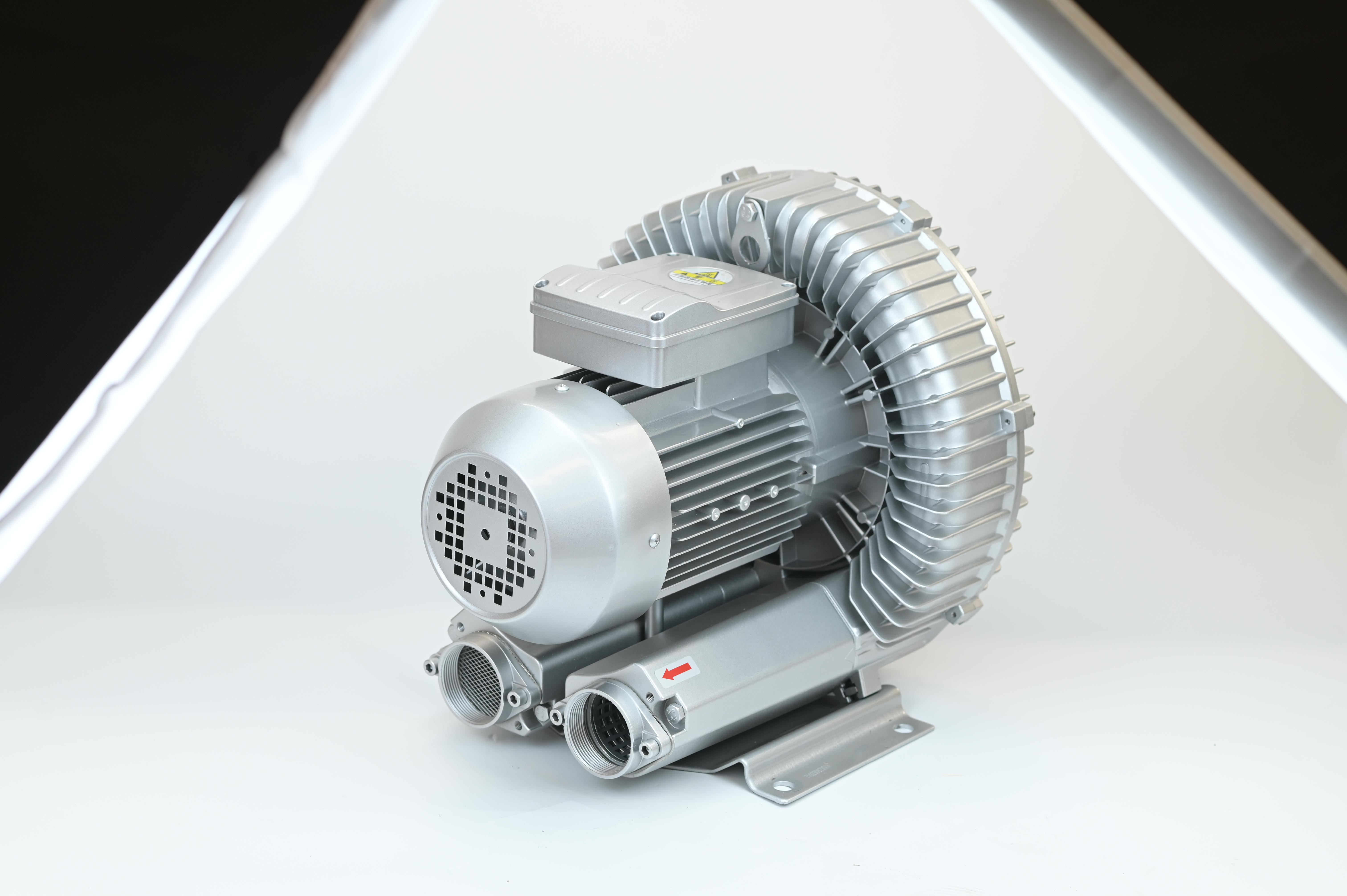
Centrifugal Air Blowers: High-flow solutions for medium-pressure applications
Centrifugal air blowers are designed for applications with high demands for air flow and medium flow resistance such as systems where the resistance is between 5–10 psi. The rotation of the impeller forces the air in the system to move in an outward direction (from the center of the circle to the circumference). This design provides the blowers with consistent duct pressure. The systems they are best suited for include ducted HVAC systems, process ventilation systems and systems requiring drying or filtering processes.
The main advantages of centrifugal air blowers are:
High air flow capacity: The ability to move large volumes of air is useful for ventilation, pneumatic conveying and material handling.
Robust pressure handling: The blowers maintain the flow of air through ductwork, filters and process resistance with little to no drop in flow.
Adaptable impeller designs: With the blades facing forward, the blowers are optimized for low-pressure and high-volume tasks while backward-curved blades are optimal for handling high pressures and dirty airstreams.
Energy efficiency: The blowers save energy with the unique design of their impellers and housing, especially with the use of variable frequency drives (VFDs) in conjunction with the blowers.
They are commonly used in dust collection, combustion air supply, fume exhaust and high temperature drying processes. The blowers exhibit high durability under thermal stress and are the right choice for systematic, energy-conscious airflow management.
Positive Displacement Blowers: Reliable pressure and vacuum for critical processes
Positive displacement blowers provide consistent movement of air streams through the mechanism of mechanically trapping and then conveying fixed volumes of air. This is often achieved through the use of synchronized rotating lobes or gears. They differ from centrifugal models since they provide more constant flow of air despite drops in pressure at the outlet of the system. This makes them especially useful for processes where high pressures are required, where a vacuum is required, or where there is a high variability in resistance.
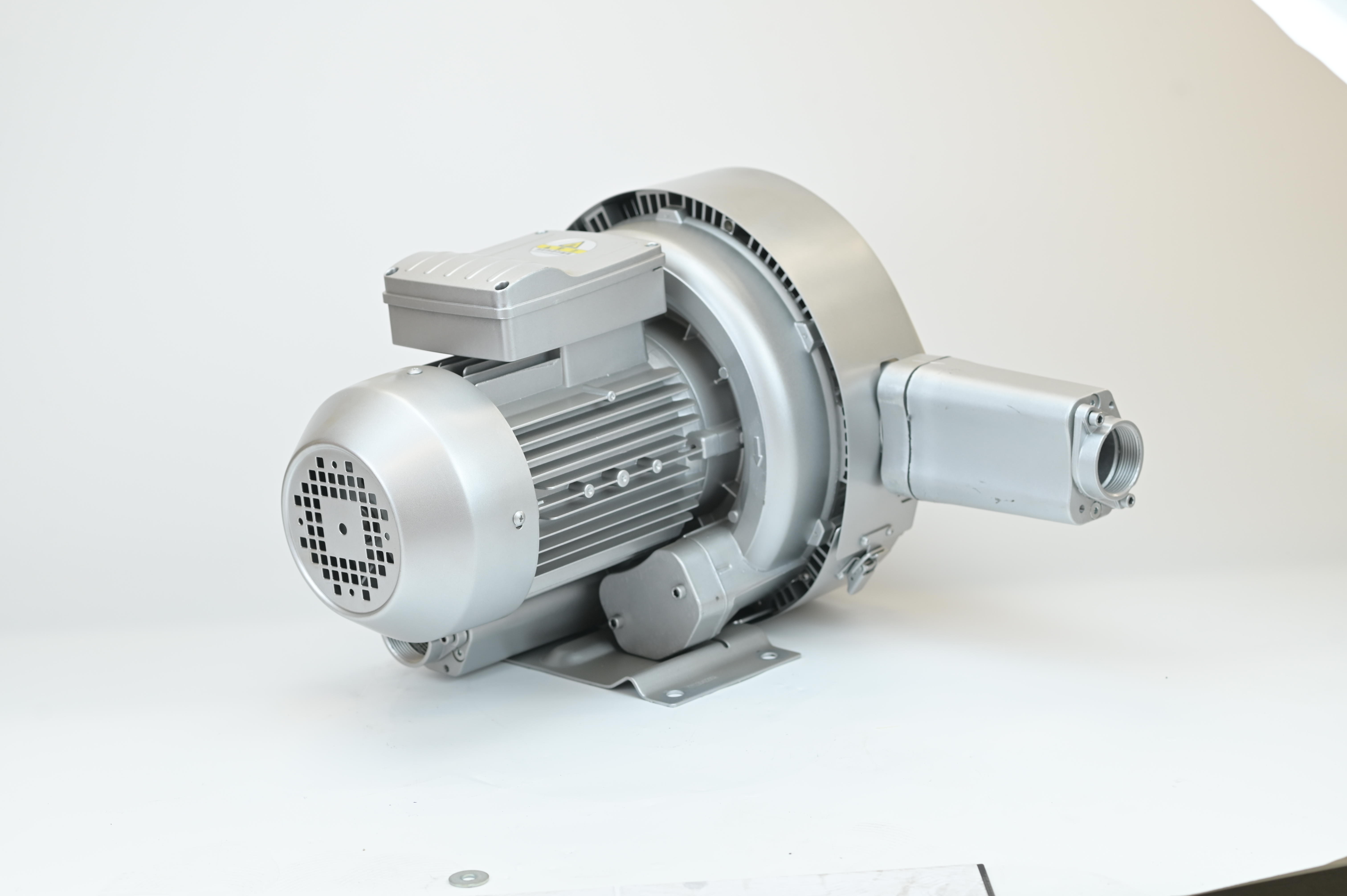
Their reliability is a result of sealed chamber designs that reduce internal air slippage, eliminating uncertainties even with clogged filters and shifting system resistance. Their uses include, but are not limited to the following:
-The pneumatic transport of bulk materials, such as grains, powders, and pellets
- Controlled constant flow of air to sustain the biological processes of activated sludge in the aeration tanks of wastewater treatment plants
- Airflow processes in chemical reactors and the recovery of chemical processing unit vent systems
- Removal of volatile chemicals from the soil in hazardous waste site cleanup
Disrupting the process continuity, such as in constant vacuum or assisted chemotherapy manufacturing, makes the blowers noise and cost not a very large concern.
Choosing between leaking systems and the absence of critical aeration or vacuum systems, the durability and ruggedness of these systems preferative.
Regenerative and Turbo Air Blowers: High-Efficiency Options for Specialized Environments
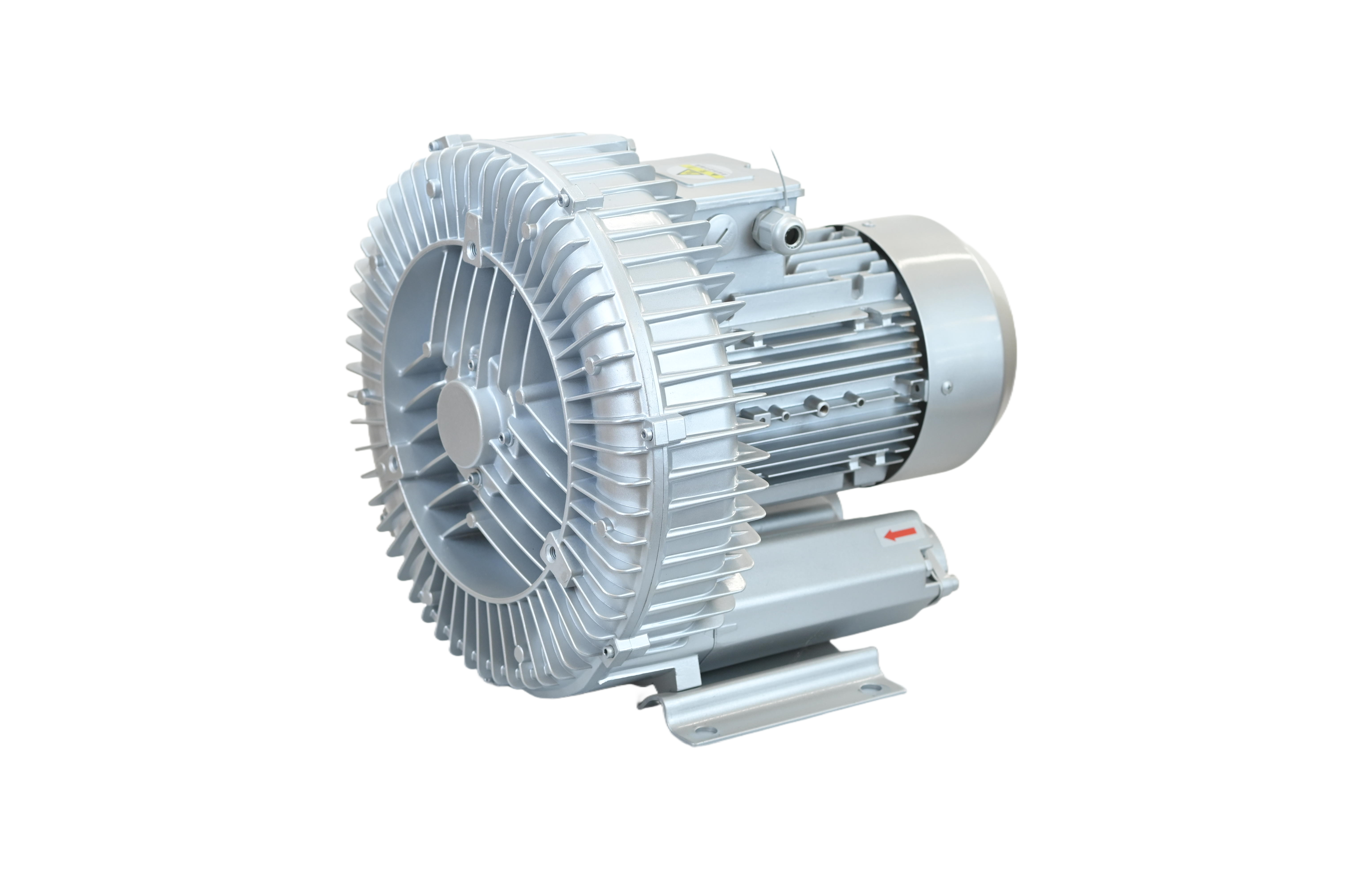
Regenerative blowers produce oil-free and almost pulsation-free airflow through a unique (and patented) impeller design that, thanks to the technology of endless recirculation of air through several asymmetrical curved channels, laminar flow becomes a commercial product. Their construction and operation do not include lubricants or oil, which would otherwise certainly contaminate the system. For this reason, regenerative blowers are used to supply air for medical sterilization, in laboratory fume hoods, and in aquaculture systems. In aquaculture, regenerative blowers help sustain the biological processes of aquatic life in fish farms. The Fluid Handling Journal (2023) claims that regenerative blowers maintain lower rates of maintenance. Maintenance requirements are reported to be up to 40% lower compared to rotary blowers.
Turbo blowers use high-speed direct-drive motors (up to 50,000 RPM) with aerodynamic impellers to create larger pressure differentials with better energy efficiency compared to other blowers. Built-in variable frequency drives (VFDs) allow turbo blowers to control airflow as needed, saving consumers 25% to 35% in energy costs. A small footprint with a magnetic bearing system eliminates oil and provides flexibility to install in any environment. This includes the high-tech industry, where they are often used to pressurize cleanrooms.
Users of turbo blowers are mostly high-demand and continuous applications. Regenerative blowers are mostly used in situations sensitive to contamination.
Turbo and regenerative blowers fill the voids in applications that cannot be serviced by standard blowers. Regenerative blowers are preferred for clean air and simple applications. Turbo blowers are preferred for applications that require a dynamic load response and controlled life cycle.
Several factors must be taken into account when selecting blowers, Airflow (CFM), pressure, efficiency, noise level, and any applicable regulations.
1. Airflow (CFM) must meet the volumetric capability of the design. Decreasing the total flow available results in inadequate performance and often failure of the designed process. Oversizing leads to efficiency decreases and an increase in overall system costs. Design must account for the worst-case system such as full filter loads, duct losses, elevation changes, etc.
2. To break down the pressure capacity for blowers, the maximum pressure the blower can provide for a system with ducting and various resistances (duct friction, filter pressure drop, process backpressure) is the static or total pressure provided by the blower. Centrifugal blowers are typically chosen for high-flow, medium pressure applications which require a static deliverance of 5–10 psi. A positive displacement blower, in conjunction with a blower operating in vacuum conditions with a static deliverance of 10 psi or more, are typically chosen for stable flow.
3. Energy efficiency lowers the operational expenses for equipment and the overall business. Unsustainable equipment can increase electrical charges incurred from the equipment by 20% to 30% annually. Out of the blowers manufactured by various companies, aerodynamically designed blowers with IE3 or IE4 electrical motors and built-in variable frequency drives for controlling appropriately based on demand are preferable.
4. Blowery is a major consideration for the speakers operating in the workplace and for satisfying the prevailing regulatory mandates. The Occupational Safety and Health Administration of the United States (OSHA) stipulates the provision of hearing protection for workplaces where sound levels are >85 dBA. Therefore, burdensome acoustical conditions must be <75 dBA. Blowery is drastically reduced with a combination of sound attenuations (operating at low-RPM, having a soundproof enclosure, and having properly sized inlet or inlet outlet silencers).
5. For some industries, business contracts or agreements necessitate compliance, such as the compliance with OSHA 1910.94 (ventilation standards), and in particular, for flows with organic ligands, oil, or exhaust moisture, or the compliance with various voice air emission presentations. Along with compliance to the electrical safety standards, particularly in hazardous areas of Class I, Div 1/2, blowers may be manufactured in high humidity or especially aggressive regimes where corrosion-resistant houses are made of stainless steel.
Examine the performance curves comprising the actual industry standards, not solely each manufacturer’s benchmark relating to a blowers’ performance. For instance, corrosion resistance and turndown ratios are more important than the maximum pressure differential range. The primary factors governing selection of an air blower are the applications to which they are to be put, not the data which are provided in the manufacturers’ catalogues.
Material Breakdown
1. Name the primary air blower types.
The primary air blower types are positive displacement, centrifugal, regenerative, and turbo air blowers.
2. How does centrifugal air blowers compare to positive displacement air blowers?
Centrifugal blowers are preferable for high-flow, medium-pressure jobs, while positive displacement blowers work for high-pressure applications. Central blowers can modify flow based on the pressure, which is disregarded by positive displacement models.
3. Where are the applications of regenerative and turbo air blowers?
Regenerative blowers can work in environments where contamination is a concern which means they would work in the majority of any controlled environment. On the other hand, turbo blowers would work in applications requiring a blowers in a continuous operation and the use of a municipal wastewater aeration.
4. When choosing air blowers, what are the indicators of a good selection?
Good selection indicators should include. air flow capacity, pressure, the efficiency, noise and of course the standards.