 EN
EN


Space Constraints: Matching Tank Orientation to Your Facility Layout
Floor Space vs. Ceiling Height: Optimizing Installation for Limited Areas
Your facility’s dimension constraints ultimately determine your options for vertical versus horizontal tank systems. Vertical tanks typically take the least amount of floor space by maximizing the volume taken on the vertical axis. This typically occurs in facilities with high, narrow constraints. Horizontal tanks take the floor space in the horizontal orientation as opposed to the vertical and, as a result, are better suited for environments with low vertical constraints such as garages. Vertical tanks do not interfere with any overhead cranes, and horizontal tanks fit well under a works bench or vehicle lift. Vertical tanks also save floor space. Never forget to measure ceiling height with floor space before choosing an air compressor with tank system to eliminate costly changes of plans to a floor/facility design constraints.
In Situ Needs in Mobile or Workshop-Based Air Compressor with Tank Systems
Generally, horizontal tanks are more appropriate for mobile or shift change applications. Their center of gravity being lower improves the stability for transport and skids or heavy duty casters allow for easy placement. Vertical tanks take up less volume but are more susceptible to tipping when mobile. For operations or construction sites that change from horizontal to vertical, changeover is simplified for unloading and loading. Even in operations that are considered horizontal but take up a significant volume, vertical systems can be a good alternative to horizontal systems. In these cases, it is very important to not only consider footprint when choosing a system, but also movement.
Performance Specification: The Impact of Duty Cycles and Air Demand on Tank Selection
The Horizontal Tank Advantage in Industrial Continuously-Operating Applications
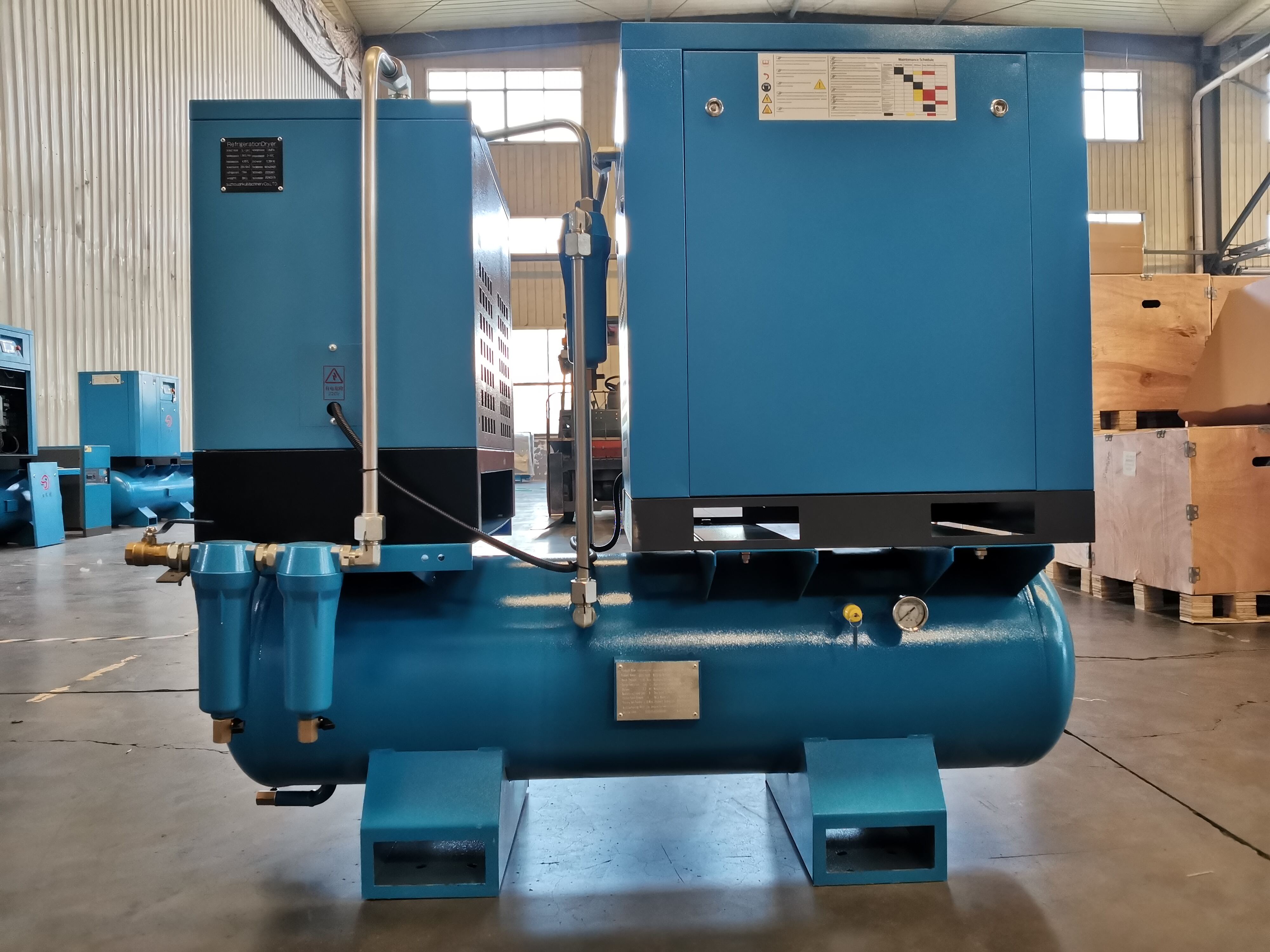
Horizontal tanks are preferred in environments that require sustained high-volume airflow. Examples include automotive assembly lines and CNC machining centers. Their shape allows for maximum passive heat dissipation via a high surface-area-to-volume ratio. Additionally, they accommodate compressors that are rated for 100% duty cycles and support the continuous operation of systems at 30+ CFM. Horizontal tanks also improve integration with building piping systems. In applications with sustained high demand and high duty cycles, vertical tanks will likely support frequent duty cycles and thus be the less optimal choice.
Vertical Air Compressor with Tank Systems: Height Requirement in Garage and Light Duty Applications
Vertical tanks are exceptional at garage and light duty applications, like at home garages, at private shops, and on mobile repair vehicles. Their upright and taller rather than wider shape optimizes the use of floor space at the tradeoff of the same horizontal capacity. This is at a premium in all applications. They are generally rated for 50-70% duty cycles. Nonetheless, systems with vertical tanks can support tools normally serviced by compressed air demand systems that require bursts of large amounts of air, i.e. impact wrenches, periodic use design air systems, and to a lesser extent, pneumatic tools that operate at less than 20 CFM. This design of compressed air serviced systems and air compressors provides the optimum space efficiency and simplicity tradeoff.
Maintenance and Reliability: Drainage, Corrosion Control, and Service Accessibility
Condensate Management: Efficiency of Gravity-Driven Drainage in Vertical vs. Horizontal Configurations
Vertical tanks use gravity to their best advantage: moisture collects at the center of the cone at the bottom, and, thus, complete and predictable evacuation occurs with the use of a single drain valve. There is no concern of stagnant water; stagnant water supports internal corrosion of the vessel, and, at the very least, contributes to the corrosion cycling of around 60% of the horizontal or highly utilized tanks, and increases the internal corrosion risk of horizontal tanks by around 60% to 80% in humid or highly utilized environments. Vertical designs require less manual drain interventions by about 30%, which in turn supports a cleaner air output and a longer internal component life, and thus eliminates the drain valve corrosion advocate.
Long-Term Durability: Valve Placement, Corrosion Risk, and Ease of Routine Maintenance
Maintenance of a component is very much dictated by accessibility. Vertical tanks concentrate drain, pressure relief, and gauge valves at the tops or bottoms, horizontal tanks distribute these valves, and these have been shown to increase inspection time by about 40% to 50% due to the horizontal tank construction and internal surface area of each tank. To reduce risk, specify tanks with anodized or stainless steel drain assemblies, and apply an internal non-corrosive surface treatment. Vertical designs measurably reduce the service life request, and have the best reliability when drain valve corrosion shakes are used.
Practicality of Mounting and Stability of Installation for Air Compressor with Tank Systems
Proper mounting increases safety and ensures equipment durability. Horizontal tanks are naturally more stable and are less likely to sway during high-output cycles due to their wide stance and low center of gravity. Vertical tank designs are more footprint efficient, but they need to be anchored well. Wall mounted tank designs need to use structural stud bonds with bolts that are at least 0.375-inch in diameter. Floor-standing designs need either to be anchored to the floor, with tank stands that are reinforced with structural supports, or to be mixed on reinforced platforms.
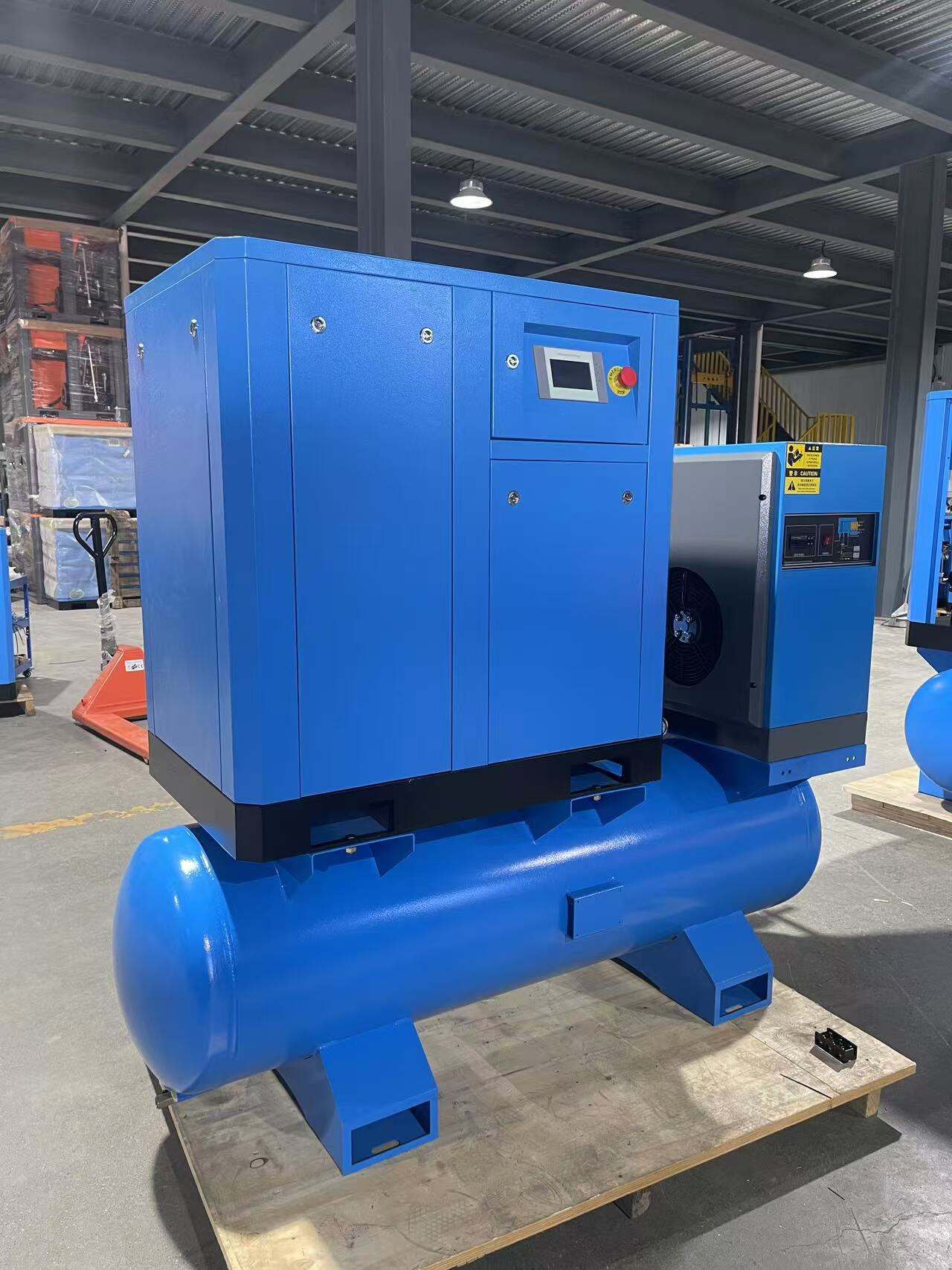
When setup is permanent, concrete pads need to be at least 4 inches and be reinforced with structural supports. Mobile units need tanks that have a locked skid frame, at least 1.5 load positioned tank weight. OSHA has a rule that the overhead space above a tank’s vertical line needs to be 3 clear. Properly engineered mounting needs to be executed to reduce the strain on fitting's seals.
When the setup is done correctly, mounting systems can reduce the load on the fittings and piping systems that can stop the pipe fittings on the piping systems from leaking. Proper mounting systems designed in an engineered method can reduce the strain on piping systems and fittings systems.
FAQ
What needs to be considered when choosing horizontal tanks and vertical tanks?
When choosing horizontal and vertical tanks, consider the facility’s restricted dimensions, the tank system’s future inclination (if any), the tank’s future intended motion and performance, and required maintenance.
Is vertical tank design more efficient considering floor diameter?
Vertical tanks design is more efficient considering the footprint on the floor. Vertical tanks use design that is high and narrow. A facility with vertical tanks with high ceilings will have better space utilization.
What are the advantages of horizontal tanks in industry?
Due to various factors, horizontal tanks have the highest usage in the greater majority of industries. Their ability to handle continuous workflows requiring high service levels, performance-related attributes (such as rapid heat dissipation), and ease of piping and other service integrations all contribute to their industry dominance.
Do the different orientations of fitment affect ease of the maintenance of the tanks?
Vertical orientations of the of the tanks are generally better as regards maintenance since the fitment consolidated, and condensate accumulation in the bottoms is easier to drain, which makes the tank less prone to corrosion and thus less manual interventions are necessary.