 EN
EN


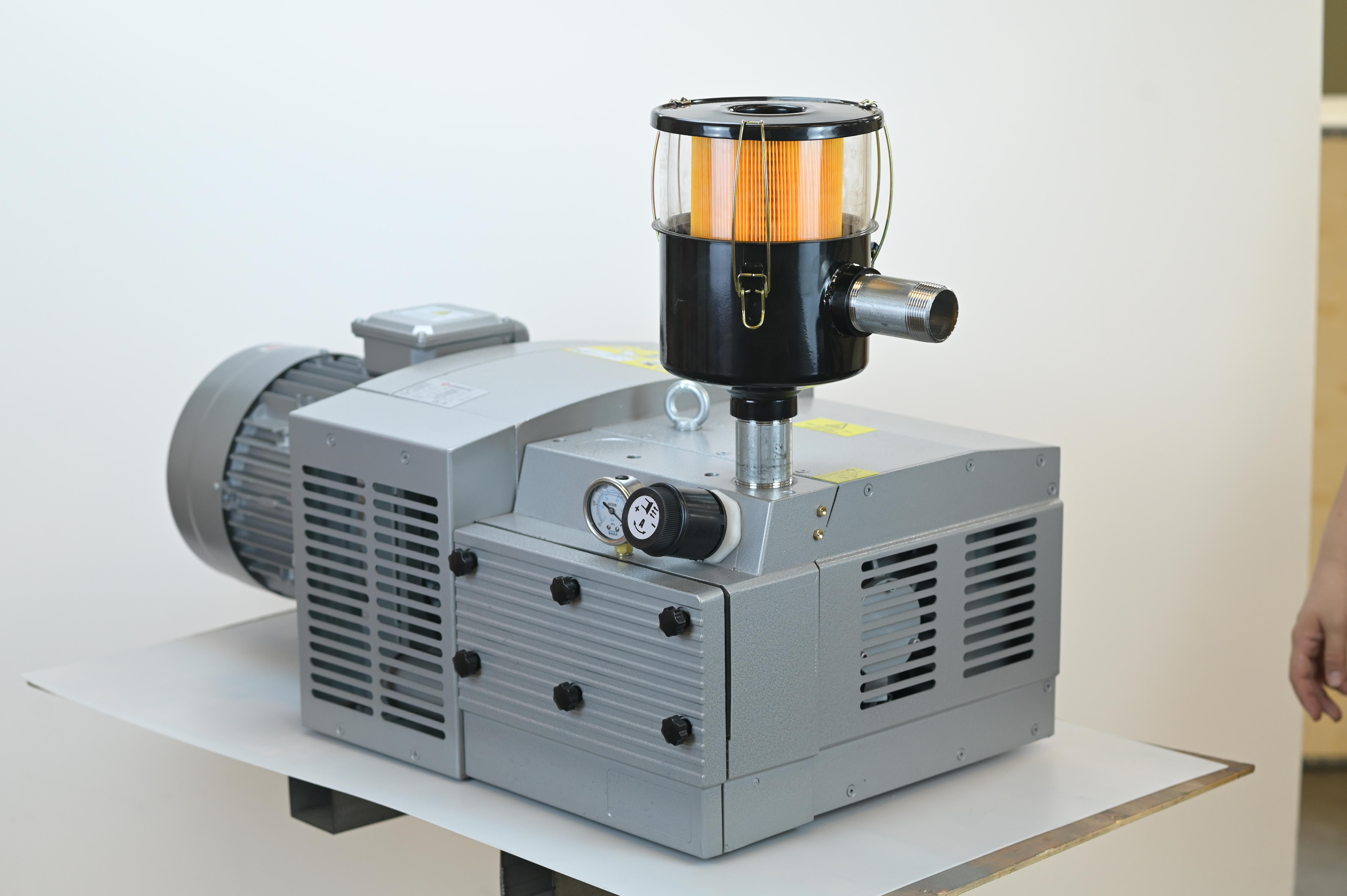
CNC Vacuum Pump Selection: Balancing CFM and Vacuum Strength for Optimal Holding Force
Walk into any CNC shop running a large-format router, and you will hear it before you see it—the hum of a vacuum pump working to hold materials in place. But here is the reality that many operators discover only after expensive trial and error: the biggest pump is not always the best pump.
Selecting the right CNC vacuum pump is about balance—between airflow (CFM) and vacuum strength (inHg), between upfront cost and long-term reliability, between the type of work you do today and the work you will do tomorrow.
Here is what shop managers and CNC operators need to know about choosing a vacuum pump that actually delivers consistent holding force.
The Core Challenge: Why CFM and Vacuum Strength Work Together
Effective CNC vacuum pump selection hinges on understanding the symbiotic relationship between airflow and vacuum level. Many operations mistakenly oversize pumps, focusing solely on ultimate vacuum—causing the system to balance at an unnecessarily low pressure and wasting significant energy.
The reality: Holding force arises from differential pressure acting over a defined surface area—not vacuum alone. While theoretical calculations assume a perfect seal, real-world CNC fixtures are never fully sealed. Material porosity, cut-path kerfs, and gasket wear create continuous leakage paths.
What this means in practice:
-
Airflow (CFM) quantifies the pump‘s ability to offset leakage and sustain the required vacuum level
-
Without sufficient CFM, the vacuum collapses—and holding force drops to zero
-
The pump must be selected to deliver the needed CFM at the working vacuum level, not just its peak inHg rating at zero flow
A system is only efficient when the vacuum pump’s performance curve intersects the total system resistance curve at the target operating point.
Calculating Your Real Requirements
Reliable sizing moves beyond the oversimplified formula of differential pressure × total table area. For porous materials like MDF or particleboard, airflow dominates the calculation.
Key factors to consider:
-
Total table area – Larger tables require more CFM to maintain vacuum across the entire surface
-
Material porosity – Open-grain woods and low-density fiberboards leak more than solid plastics
-
Cut-path leakage – Each cut breaches the surface seal, introducing dynamic leakage
-
Spoilboard condition – Worn or dirty spoilboards leak significantly more than fresh ones
A practical approach: Determine the CFM needed to maintain a minimum target vacuum—such as 12 inHg—while factoring in the real-world flow resistance of the spoilboard and workpiece. Industry guidelines suggest that for a typical 4×8-foot table, leakage can be substantial, and a pump delivering approximately 384 CFM at the working vacuum level may be required.
From the field: In a cabinet shop I visited, the operator had installed a high-vacuum rotary vane pump rated at 28 inHg but only 15 CFM. On small, non-porous plastic parts, it worked perfectly. But when they ran full sheets of MDF, the vacuum dropped to under 5 inHg within seconds of starting the cut. The pump simply could not keep up with the leakage. After switching to a regenerative blower with 200+ CFM at 10 inHg, they cut the same sheets with zero movement—and saved 40% on the pump cost.
Three Pump Types Compared
Rotary Vane Pumps: High Vacuum for Low-Leakage Fixtures
Rotary vane pumps excel where high vacuum and minimal leakage are critical—such as holding non-porous materials like solid plastics, aluminum sheets, or vacuum-formed fixtures with tight seals. Their oil-lubricated or dry-running design delivers consistent deep vacuum (often 20–25 inHg or more), enabling stable hold-down under lateral cutting forces on small or dense workpieces.
Key specifications to look for:
-
Maximum vacuum: 20–25+ inHg
-
Typical CFM: 5–174+ CFM depending on model
-
Best for: Non-porous materials, small parts, precision work
Trade-offs: Oil-lubricated versions require regular oil changes, vane inspections, and cooling intervals. Noise levels also tend to be higher than oil-free alternatives. In low-leakage setups, rotary vane pumps provide precise, unwavering suction—but operators must plan for ongoing maintenance.
Regenerative Blowers: High-CFM Solutions for Large-Sheet CNC Routers
Regenerative blowers prioritize high airflow over deep vacuum, typically achieving 8–12 inHg while moving large air volumes. This makes them ideal for spoilboard-based CNC routers processing full 4×8-foot sheets of MDF or plywood—where material porosity and surface leakage demand constant air replacement.
Key specifications to look for:
-
Maximum vacuum: 8–13 inHg
-
Typical CFM: 100–400+ CFM
-
Best for: Full sheets of porous materials, large-format routing
Advantages: Their impeller-based design handles dynamic leakage gracefully, maintaining usable holding force even as uncovered zones pass under the cutter. They are oil-free, low-maintenance, and cost-effective.
Trade-offs: Their moderate vacuum may be insufficient for small, non-porous parts or heavy metals, risking workpiece movement. For large-format routing, however, their ability to continuously pull high CFM across a sacrificial board offers a cost-effective solution.
Claw and Screw Pumps: Oil-Free, Continuous-Duty Options
Claw and screw pumps operate completely oil-free, using non-contact rotors to compress air without internal lubrication. This eliminates oil mist—a key advantage in cleanroom CNC operations, food-grade machining, or humid woodshops where oil residue would contaminate surfaces.
Key specifications to look for:
-
Maximum vacuum: 20–25 inHg
-
Typical CFM: Varies by model; continuous-duty rated
-
Best for: Clean environments, 24/7 production, hygiene-critical applications
Advantages: Both types deliver stable vacuum levels and high CFM, matching rotary vane performance while avoiding oil-change downtime and disposal costs. Their durability stems from near-zero rotor wear; service life often exceeds 30,000 hours with minimal maintenance.
Trade-offs: Higher upfront cost makes them less cost-justified for light-duty routers running only a few hours daily. Where hygiene, sustained duty cycles, and long-term reliability are top priorities, claw and screw pumps stand out.
Machine-Specific Matching: Spoilboard vs. Modular Fixtures
Spoilboard-Based CNC Routers
Spoilboard routers rely on a porous MDF bed to distribute vacuum across large sheets—but every cut breaches the surface seal, introducing dynamic leakage. A pump with high airflow capacity (CFM) is essential to continuously evacuate volume and sustain usable vacuum.
Key considerations:
-
Material porosity adds further complexity: open-grain woods leak more than solid plastics
-
Pump CFM should exceed estimated leakage by at least 20–30% to maintain holding force
-
For typical 4×8-foot sheets, regenerative blowers are a practical choice due to their ability to move large air volumes at moderate vacuum (5–10 inHg)
Properly matching pump capacity to spoilboard and workpiece conditions prevents part lift during aggressive toolpaths.
Modular Fixture Pods and Quick-Change Systems
Modular vacuum pods and dedicated fixture plates seal tightly against the part, minimizing leakage and enabling rapid achievement of high vacuum (20–27 inHg). The primary challenge is response time—how quickly the pump evacuates the small pod volume between part changes—and duty cycle efficiency in automated, high-cycle production.
Key considerations:
-
Rotary vane or claw-type pumps deliver near-instant pull-down and tolerate frequent on/off cycling without overheating
-
Because vacuum demand per cycle is low, pumping power can be sized for peak evacuation speed—not continuous flow
-
Integrating a vacuum reservoir and valve manifold further shortens evacuation time and reduces pump starts
This approach ensures dependable performance in lights-out manufacturing environments.
Lessons from the Field
In a custom woodworking shop we reviewed, the owner had spent $8,000 on a high-end rotary vane pump, expecting it to handle everything from solid surface countertops to full sheets of plywood. The pump worked beautifully on the countertops—but struggled on plywood, losing vacuum as soon as the cutter engaged.
The diagnosis: The pump was optimized for high vacuum (27 inHg) but low CFM (18 CFM). On porous plywood, the leakage exceeded the pump‘s airflow capacity.
The solution: The shop added a regenerative blower (200 CFM at 10 inHg) for sheet goods and kept the rotary vane pump for solid-surface work. Total cost: $10,500—only $2,500 more than the original single-pump approach.
The result: The shop now runs both pumps on a manifold system, switching between them based on the material. Scrap rates from parts lifting dropped by 90%, and the owner estimates the system paid for itself within eight months.
Another example: a medical device manufacturer running cleanroom CNC operations switched from oil-lubricated rotary vane pumps to oil-free claw pumps. The oil mist that had been contaminating sensitive components was eliminated entirely. Annual maintenance costs dropped from $4,200 to under $800 per pump.
What to Look for in a CNC Vacuum Pump Supplier
For companies that manufacture or supply CNC equipment, vacuum pump expertise is not just about selling a box—it is about understanding the application.
A supplier that understands CNC workholding will:
-
Ask about your typical materials (porous vs. non-porous)
-
Inquire about table size and fixture type
-
Provide performance curves—not just peak ratings
-
Offer guidance on leakage calculations for your specific setup
-
Support both high-vacuum and high-CFM solutions depending on your needs
When evaluating suppliers, ask for documented performance data at your working vacuum level—not just maximum ratings. A pump that delivers 25 inHg at zero flow may only deliver 5 inHg at the CFM you actually need. The performance curve tells the real story.
FAQ
Why is balancing CFM and vacuum strength critical for CNC operations?
Balancing CFM and vacuum strength ensures sufficient holding force by offsetting leakage and maintaining the required vacuum level during CNC operations. Too much focus on either parameter without considering the other can lead to energy inefficiencies and reduced performance.
How does leakage affect CNC vacuum pump performance?
Leakage from material porosity, cutting kerfs, and gasket wear reduces holding force. A pump must provide enough airflow (CFM) to sustain vacuum levels under real-world leakage conditions for optimal performance.
Which CNC vacuum pump type is best for spoilboard routers?
Regenerative blowers are ideal for spoilboard routers because they offer high airflow (CFM) at moderate vacuum levels, effectively handling dynamic leakage and material porosity common in large-format operations.
What are the advantages of claw and screw pumps in CNC machining?
Claw and screw pumps provide stable vacuum levels and high CFM without requiring oil. They are durable, clean-room compatible, and suitable for environments demanding hygiene or continuous heavy-duty operation.
How do I calculate the CFM I need for my CNC table?
Calculate your table surface area, estimate leakage based on material porosity and spoilboard condition, and select a pump that delivers the required CFM at your target working vacuum level—typically with a 20–30% safety margin.