 EN
EN


Technology-Based Maintenance for Your Dryers
Each dryer incorporates different components, has different ways in which it can fail, and requires varying forms of maintenance. Because of this, maintenance for your air compressor dryer should be tailored to the specific types of compressors your system employs.
Dryer Maintenance for Refrigerated Dryers: Cooling Coils, Refrigerants, and Condensates
You should inspect cooling coils every 3 months for the presence of frost, dirt, and debris which can impede airflow. Each system must have refligerant levels checked during the manufacturer recommended yearly maintenance so we can avoid recurring dew point issues. To minimize the moisture content that can be carried downstream, the condensate drain should be tested weekly to simulate a purge cycle. To avoid the buildup of slime, which can impede heat transfer, clean the evaporator surfaces bi-annually. In 2023, Industrial Air Technology found that dew points can increase as much as 15 degrees Fahrenheit due to inadequate maintenance and that system performance and air quality will be negatively impacted as a result from maintenance neglect.
Desiccant Dryer Maintenance: Tower Cycling, Desiccant Life Monitoring, and Regeneration Verification
To ensure the drying process is uninterrupted, it is necessary to check the tower switching sequence daily. Using calibrated moisture indicators, monthly assessments of the condition of the beds will provide the earliest indicators of problems related to the performance of adsorption. At a minimum, every three months, it is necessary to test the performance of the regeneration heaters and determine the purge air flow quantity. If heating is insufficient or flow drops below required levels, it actually speeds up the breakdown of the desiccant material over time. Most facilities need to replace desiccant material before five years, because of the operating conditions and moisture breakthrough data, not just because of time. Recent industry studies from Compressed Air Audits 2023 show approximately 67% of issues regarding excess moisture in systems is due to degraded desiccant material.
You'll want to maintain your Membrane Dryer by testing integrity, calibrating flow rates, and changing filters.
Using pressure decay tests, check membrane integrity about every 6 months. These tests identify fiber breaches before a shift in dew points can be detected. Channeling (dying and wetter than intended areas) is a common problem with flow control valves that are out of calibration. To avoid this, be sure to calibrate your valves once a year. Pre-filter changes are required about every 3 months, if not sooner. Clogged pre-filters increase pressure which decreases the lifespan of the membranes. If your outlet humidity sensor is behaving erratically, you may have a problem with the physical system. If left unchecked, just one broken fiber can easily raise dew points 25 degrees Fahrenheit.
Main Parts of an Air Compressor with Dryer System
Before and After Filters: Particle Separator and Pressure Loss Monitor
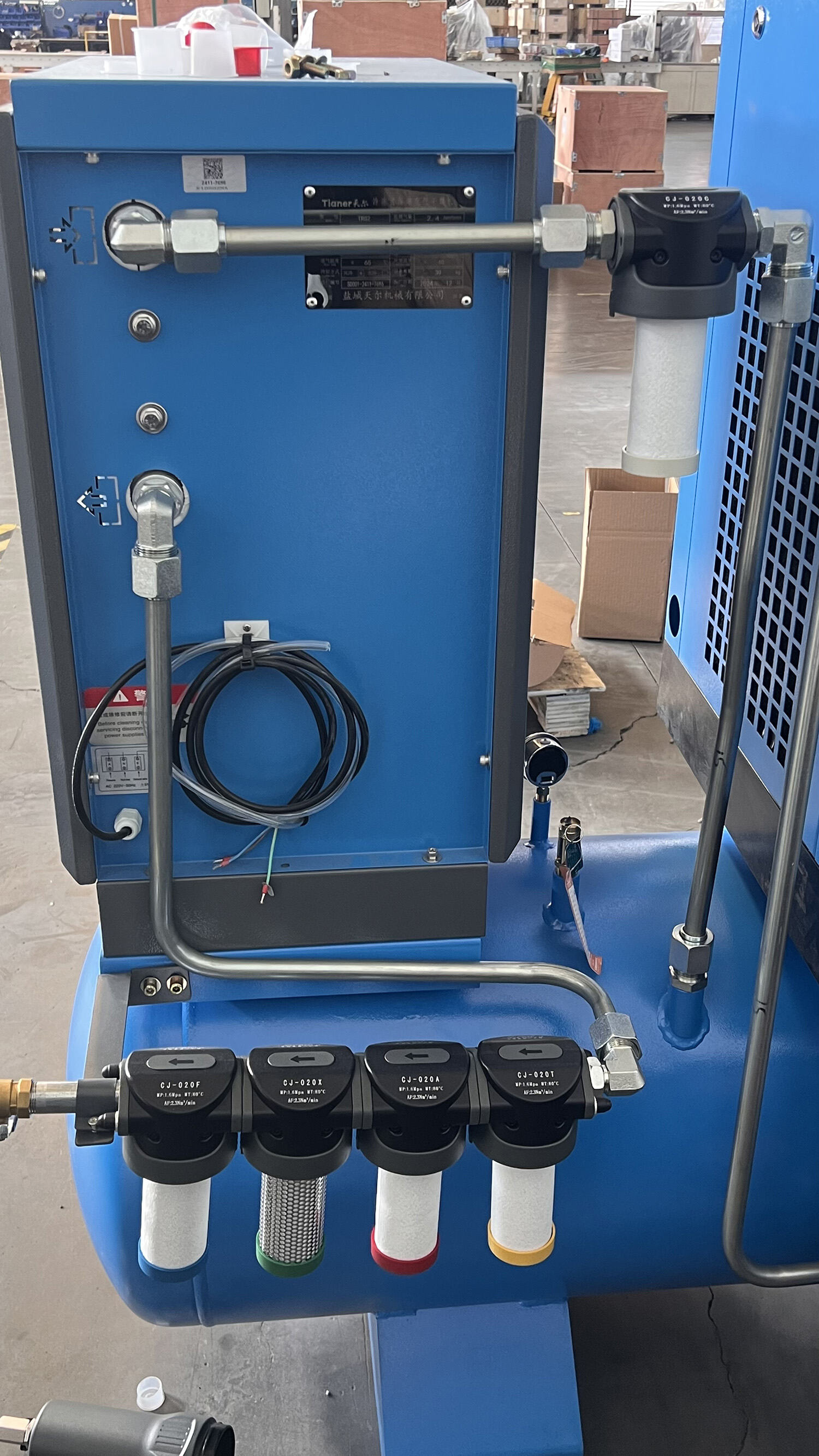
The inlet filters are the first defense against dust and rust and oil aerosols. After drying, secondary filters assist in capturing particles to help the facility meet the ISO 8573-1 standards for other sensitive operations. Weekly inspections of the differential pressure gauge should and must be done. When there is a steady increase of about 2 to 3 psi, it means the filters are starting to get loaded. Most manufacturers suggest replacing the filter cartridges when the pressure loss is between 7 and 10 psi. This will help increase the airflow and reduce the costs of wasted energy. Letting the filters get dirty will increase cost of energy bills for industries about 17% (U.S. Department of Energy, Compressed Air Challenge Handbook). Also, dirty filters will cause the downstream valves and actuators to wear out. No one wants to deal with these issues during maintenance.
Automatic Condensate Drains: How to Check Functionality and What Common Breakdown Mistakes to Avoid
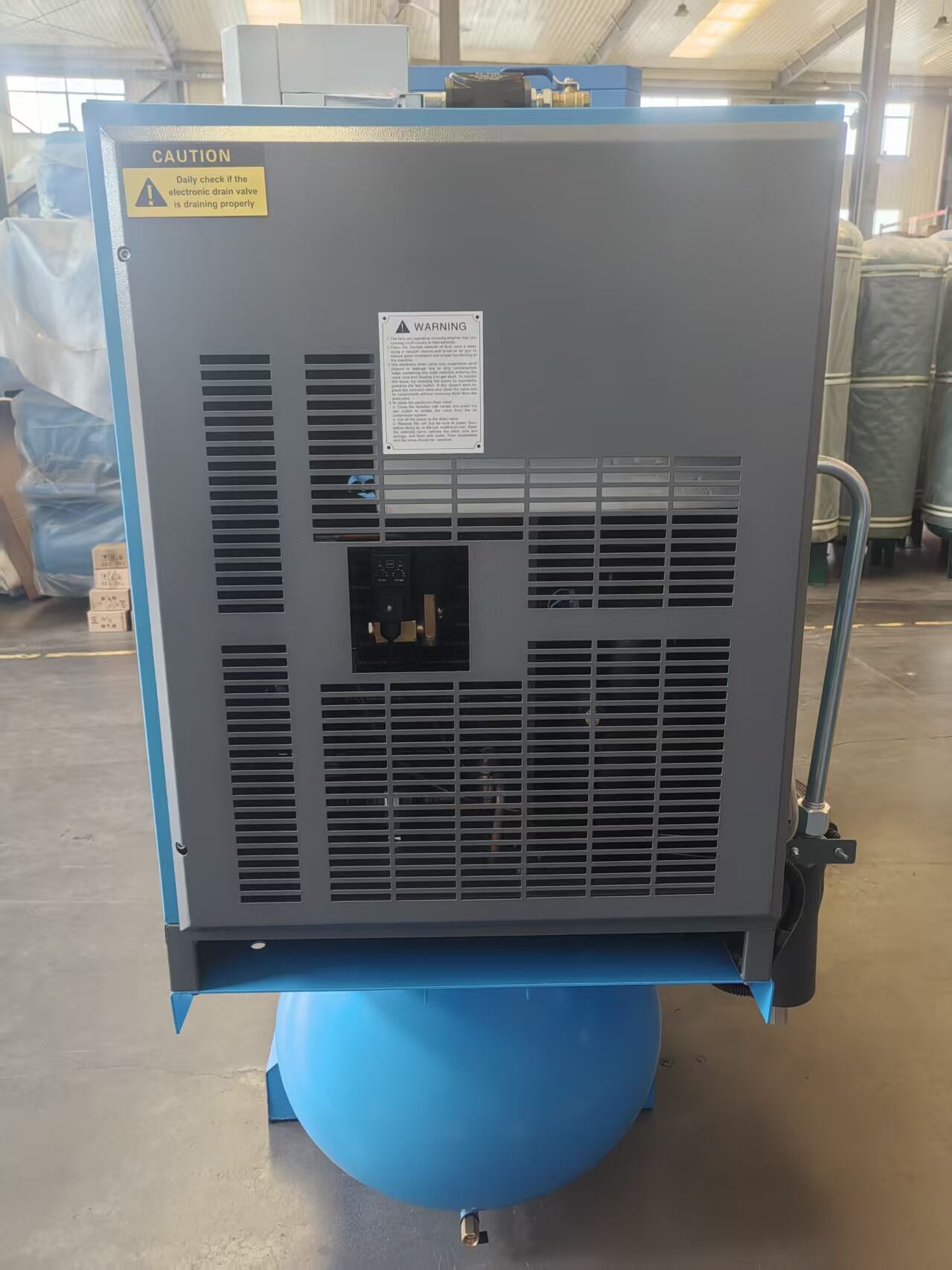
Automatic drains eliminate accumulated moisture in receiver tanks, dryers, and various filtration components in the system. Functionality can be verified monthly while the system is in normal operation. You should be able to hear the characteristic purge sounds and see liquid in the discharge. Most problems stem from faulty solenoid valves, which is about 33% of all problems, and clogged orifice from oxidized old oil sludge. Then, water will end up in the process streams, corrode the piping, and shorten the life expectancy of the failing parts. Diaphragm screens should be inspected every 3 months just like the cleaning of these discharge lines. These maintenance tasks will delay operational stops that can be expensive in systems where reliability is crucial, and maintenance can be planned.
Monitoring Performance: Dew Point, Pressure, and Moisture
Dew Point Analysis as the Core Indicator of an Air Compressor’s Health
Dew point is the temperature at which the moisture in compressed air begins to condense, and is therefore an indicator of the health of the air compressor’s dryer system. If the dew point remains constant at below -40F (-40C), liquid water is unlikely to be present in the majority of industrial pneumatic systems. The two main types of dew point sensors in use are:
1. Capacitive Sensors are less expensive and have quicker response times, but are prone to drift and in high oil/particulate environments, calibrations should be performed every quarter.
2. Chilled Mirror Optical Sensors provide laboratory-degrees of accuracy and are ±1°F, but require monthly mirror cleanings to prevent contamination errors. They should be used when the process drying and regulatory compliance are critical.
Moisture reaching the end-use equipment can create problems such as corrosion of valves, actuators, and Microbial contamination in the pharmaceutical, food, and laser-cutting industries, as well as Ice build-up in distribution lines located in cold climates. The absence of corrective measures can lead to:
- Corrosion in valves and actuators (accelerating failure rates by 72%, per Fluid Power Journal studies)
- Microbial proliferation in pharmaceutical, food, or laser-cutting applications
- Ice formation in cold-climate distribution lines.
Combine dew point measurements with pressure drop trend analyses to identify 89% of developing dryer faults to avoid an average of 34 hours of unplanned downtime. It is recommended to check the readings against a calibrated handheld meter at least monthly.
Streamlined Maintenance Scheduling for Optimal Function
An effective maintenance schedule for your air compressor with dryer should be structured, technology driven, and compartmentalized in order to maximize uptime, efficiency, and service life. Using generic checklists is unadvisable; go beyond checklists to better define schedule and scope with the conditions of your operation, your load profile, and the environment your compressor is in.
Build Frequency-Based Task Lists: Each dryer and OEM will have their own type of guidance, and this will help determine a dryer's type, which will help in defining guides for daily (visual confirmation of drain cycle), weekly (logging of pressure drops in the in/out filters), quarterly/annual (testing of desiccants for moisture and verification of refrigerants) and of course based on calendar dates.
Assigning Responsibility: An administrative Designation of Responsibility form will be prepared that will define the requirements of trained personnel. Through this form, standard operating procedures, and electronic or paper-based consistency checklists, personnel, will be able to complete this within a reasonable time, and the circles of accountability will be closed.
Streamlined documentation will include: An example of this would be the central log for the dates, observations and different measurements (dew point, pressure drop), parts replaced and technician notes. Documenting for the purpose of identifying cost recapture will be received, root-cause analysis and will support predictive maintenance.
Within the maintenance framework, real-time dew point and pressure drop trends should be incorporated, along with documented trends, to show consensus for the reason. An upward drift trend should be the catalyst for more in-depth and timely troubleshooting.
Review and Adapt Proactively: Look annually at maintenance logs alongside production output, energy consumption, and fault logs. Adjust intervals—for example, shorten pre-filter replacement intervals in dusty facilities or increase checks of desiccant moisture during and after seasons of high humidity—to reflect actual wear, not guesses.
This adaptive, data-driven approach reverses the flow of maintenance from reactive cost center to proactive support of maintenance strategy reliability—defining your air compressor with dryer to deliver clean, dry air on demand, year after year.
FAQ
What is the significance of dew point measurement in air compressor maintenance?
Dew point measurement is a key indicator of the condition of air compressors with dryers. It illustrates the moisture level that develops in the compressed air system. When a dew point remains consistently below –40°F (–40°C), liquids do not form, and the system operates, preventing damage to the device.
How often should refrigerant levels in a refrigerated dryer be monitored?
Refrigerant levels in a refrigerated dryer should be monitored annually at the refrigerant level gauges of the manufacturers. If refrigerant levels remain unchecked, the dew point may not be regulated, compromising the proper functioning of the system.
What are the sure signs of malfunctioning automatic condensate drains?
Some signs of malfunctioning automatic condensate drains are the absence of characteristic purge sounds, no actual liquid discharge, and faults related to solenoid valves or obstructed orifice holes. It’s important to conduct repairs and inspections in order to keep the drain’s functions reliable.